Project setSheet 00 · Cover

MUHAMMEDPYZ

Backend and security work.

Revisions
RevDateDescription
R122026-11-12English versions of the notes, sheet descriptions, copy button for code
R112026-11-12Notes expanded to 19; existing notes extended
R102026-11-12Markasium CS2 and Peder sheets added
R92026-11-12Markasium: authentication moved from Keycloak to the API's own JWTs
R82026-11-12Technical notes added to the sheets: 6 notes (Turkish)
R72026-10-01SiberArchive and Codemisk sheets added
R62026-09-30Set prepared for release
R52026-09-25NyxBot: module system and bot–panel sync
R42026-09-18Counter-Türkiye: shared repository created
R32026-06-27Markasium: first commit
R22026-05-05Tadinda: exhibited at the 15th R&D Project Fair (Mersin)
R12026-03GHOST Protocol v1.1: security audit and fixes
↓ sheet index
Drawn by
MUHAMMEDPYZ
Location
Türkiye
Set
10 sheets · 1 legend
Contact
mail

Sheet index

Sheet 00 · Page 2

Sheet 01 / 10

GHOST PROTOCOL

End-to-end encrypted, anonymous, real-time messaging system. Traffic goes through Tor, messages live only in memory and nothing is left behind when the session ends.

Subject
Security
Platform
Windows · Linux · macOS · Android
Version
1.1.0
Source
Closed source
Date
2025–2026
Status
On hold

GHOST Protocol is a serverless end-to-end encrypted messaging system. The core is written in Rust and Tokio; it runs natively on desktop and through a JNI bridge on Android. Two people meet in a room: the host generates a blind token, the other side joins with the token and a password, and a full room admits nobody else. Connections go through Tor, and the key exchange combines classic X25519 with post-quantum Kyber-1024. Messages are never written to disk; memory is locked, crash dumps are disabled and buffers are wiped when done. Version 1.1 went through a security audit; the project is on hold. The notes cover the hybrid key exchange and the memory protection, including their limits.

01ViewsRedrawn from Compose code · sample data
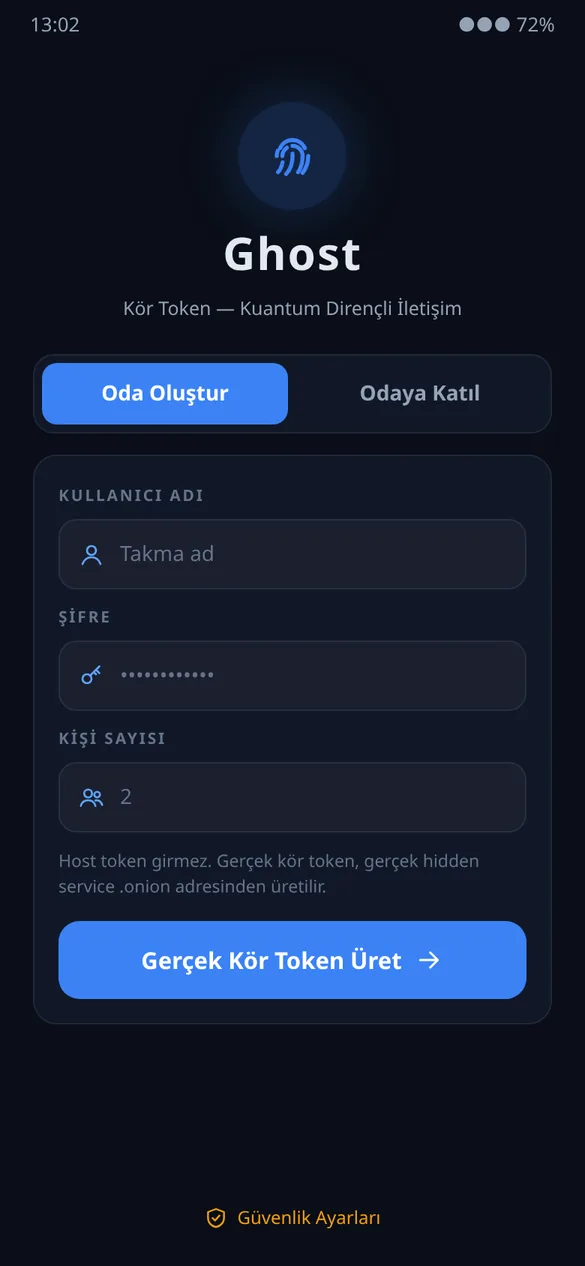
GHOST Android client room setup screen: username, password, member count and the blind token button
AAndroid · room setup
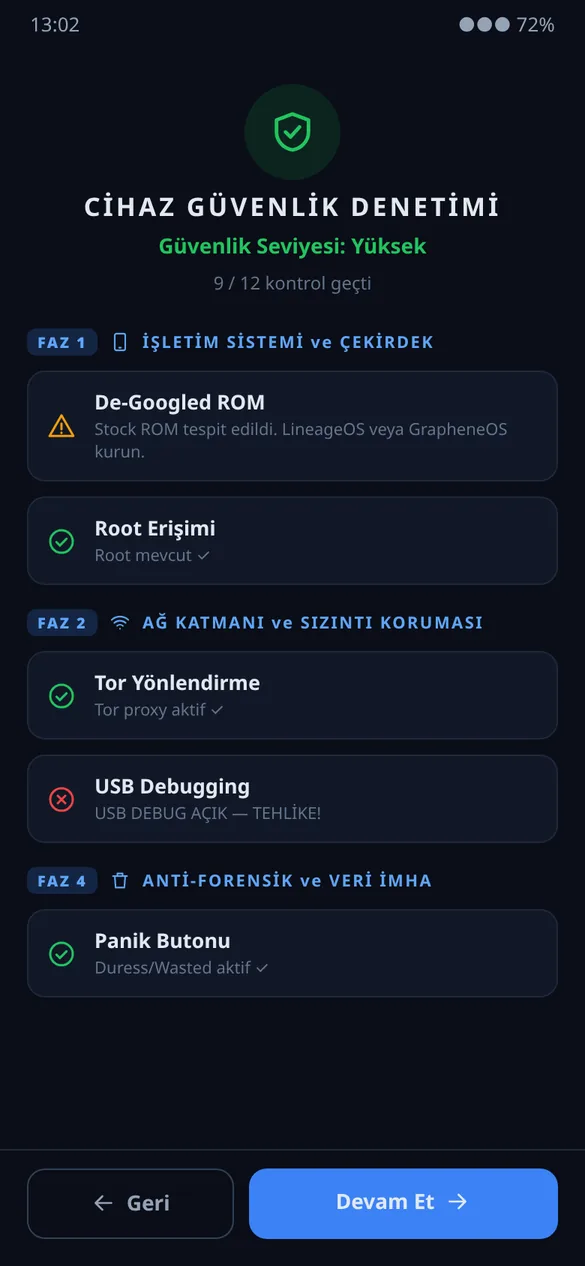
GHOST Android client four-phase device security audit screen
BAndroid · device security audit
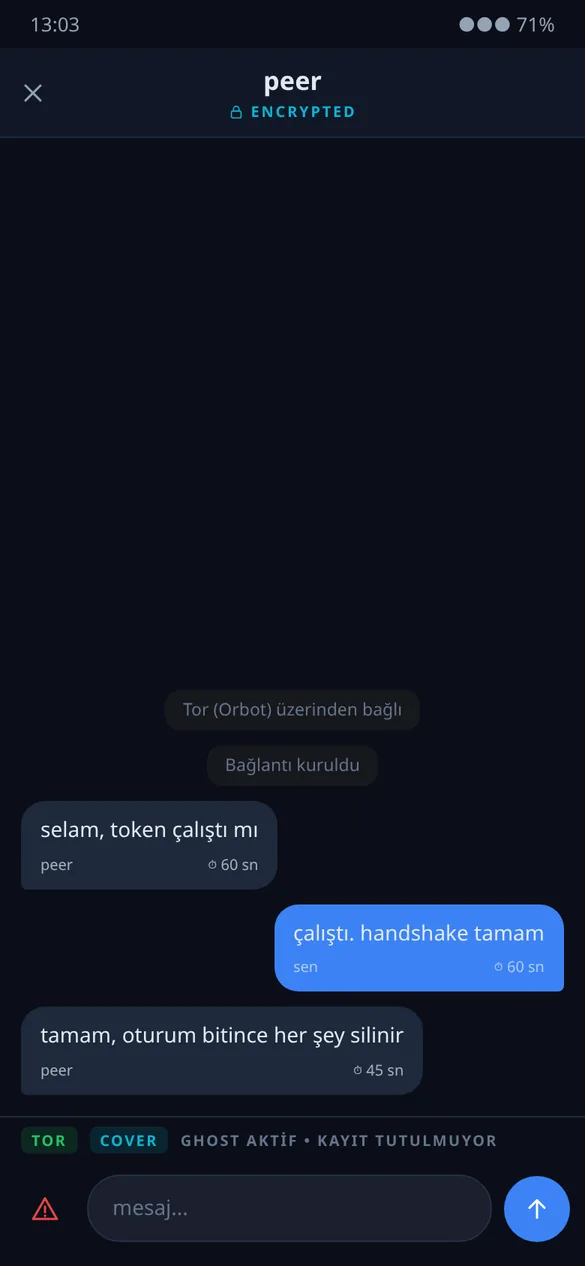
GHOST Android client encrypted chat: Tor and cover traffic indicators, self-destructing messages
CAndroid · encrypted chat

02Schema and notes

HANDSHAKE · X25519 + KYBER-1024 CLIENT Aghost_core · Rust CLIENT Bghost_android · JNI 1 2 3 TOR CIRCUIT MEMORY RAM only · locked · no core dumps SHUTDOWN · 7-PASS WIPE
  1. Key exchange uses a hybrid X25519 + Kyber-1024 handshake.
  2. No server; connections go through Tor using a blind token.
  3. Messages are kept only in RAM; memory is locked and core dumps are disabled.
  4. No logs; a 7-pass wipe runs on shutdown.
  5. Core in Rust and Tokio; the Android client binds to the core through JNI.

03Parts list5 parts

ItemPartDescription
01Crypto layerHybrid X25519 + Kyber-1024 handshake, session keys
02Network layerRouting over Tor, blind-token connection
03Memory protectionRAM encryption, memory locking, core dump prevention
04Trace wipingNo logs, 7-pass wipe on shutdown
05Android clientJNI bridge to ghost_core

04Notes2 notes

NoNoteTopic
N1Hybrid key exchangeTurning X25519 and Kyber-1024 secrets into one session key with HKDF-SHA3
N2Secrets in memoryKeys not leaking to swap, core dumps or freed memory; platform limits

—End of sheetdrawn by MUHAMMEDPYZ
Sheet 02 / 10

MARKASIUM

Multi-vendor food ordering platform that runs on subscriptions instead of commissions. It consists of a customer storefront, a restaurant panel and a single API that serves both.

Subject
Backend
Platform
Web
Source
Private repo
Date
2026
Status
In development

Markasium is a multi-vendor food ordering platform where restaurants pay a monthly subscription instead of a per-order commission. The customer site, restaurant panel, courier app, admin and founder panels all talk to one Spring Boot API. Authentication uses 15-minute ES256 JWTs signed by the API itself; refresh tokens are single-use in Redis and each panel reads its own cookie. Payments are taken on Iyzico's hosted page, so card data never reaches Markasium; the return is verified by asking Iyzico. Orders, menus and subscriptions live in MariaDB, and the services run on Docker. The notes cover verifying the Iyzico return, moving from Keycloak to self-issued JWTs, and the single-session design.

01ViewsBuilt from current source · sample data

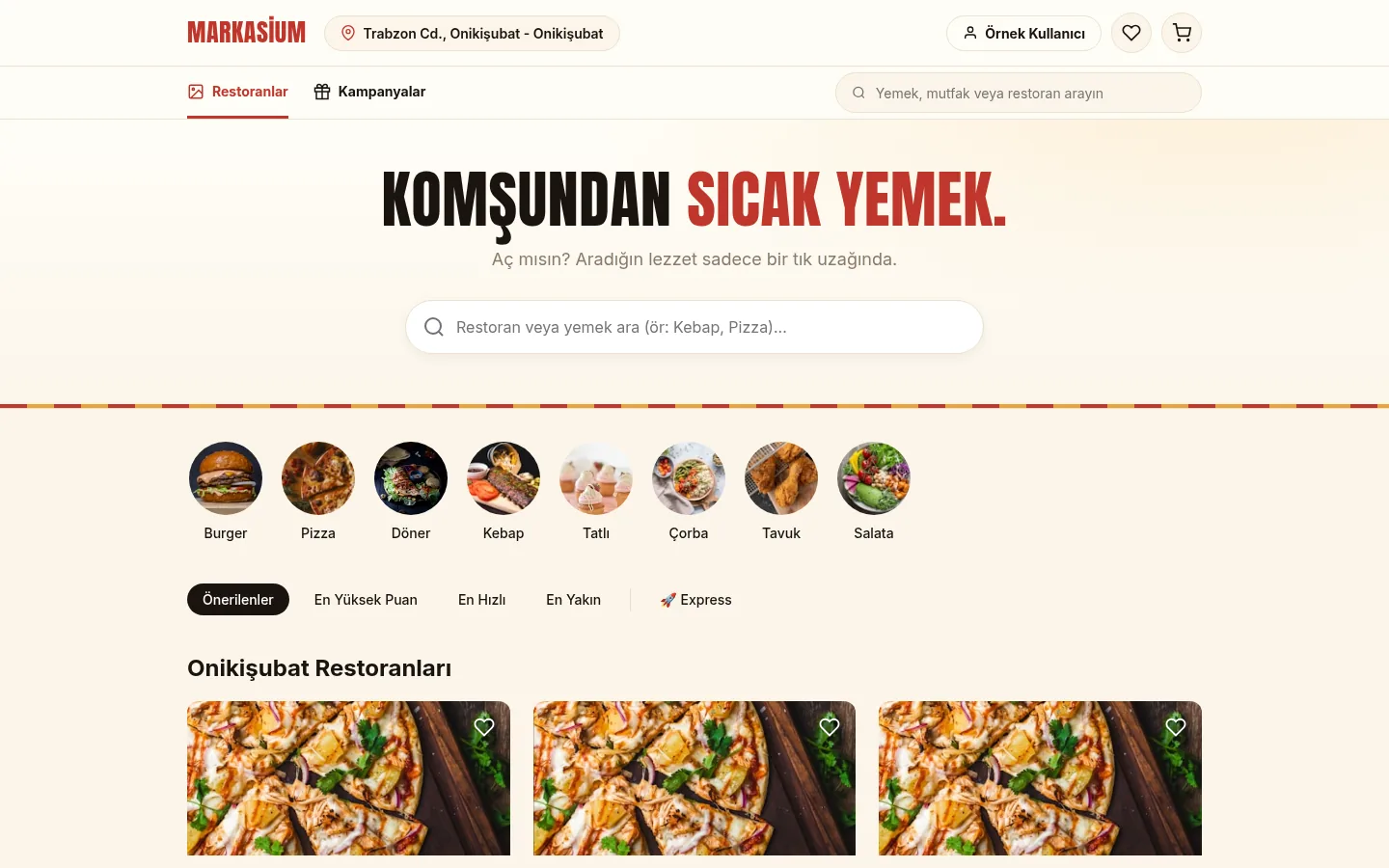
Markasium customer site: restaurants by location and cuisine categories
ACustomer web · home
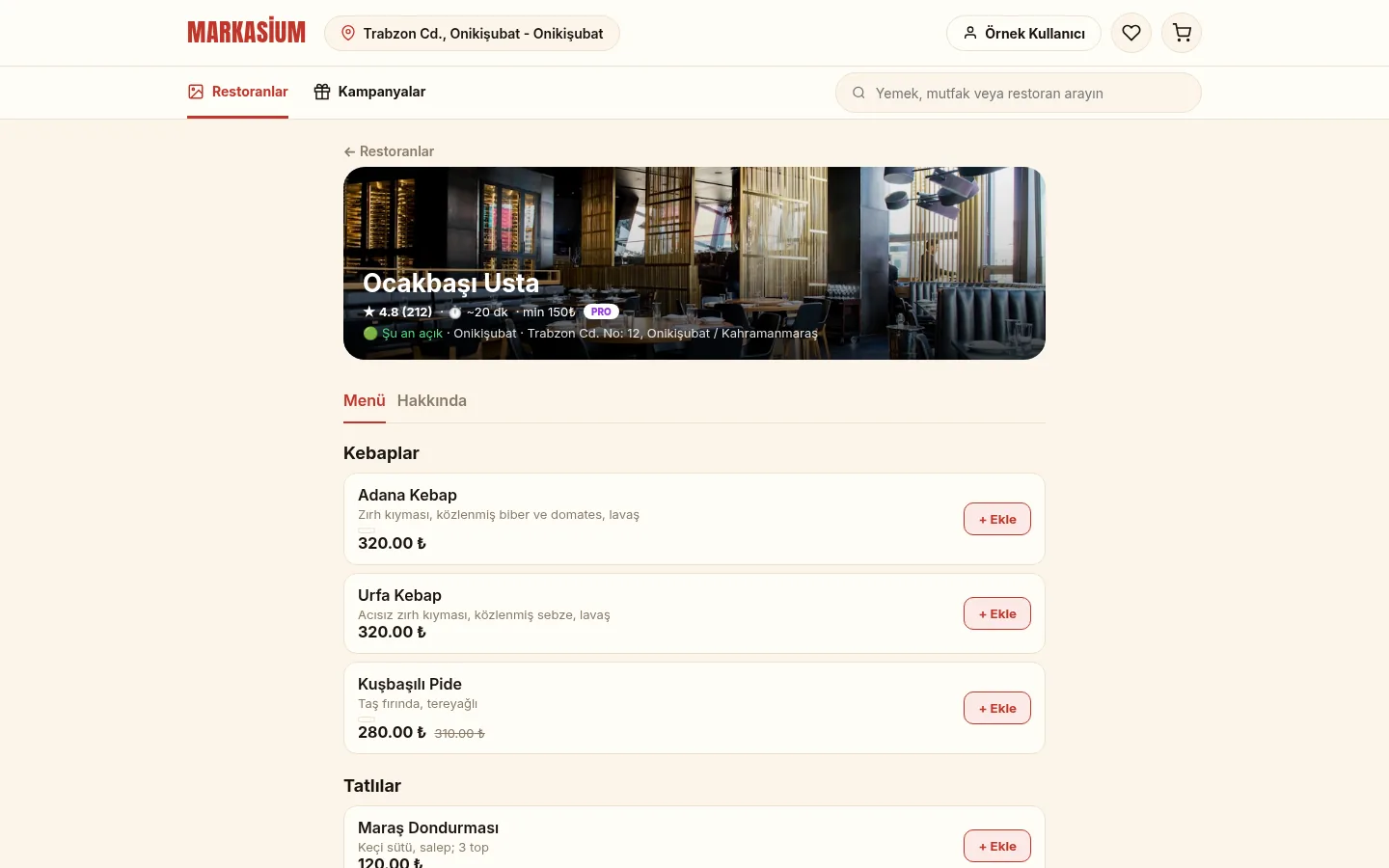
Restaurant page: rating, delivery time and a categorised menu
BCustomer web · restaurant page
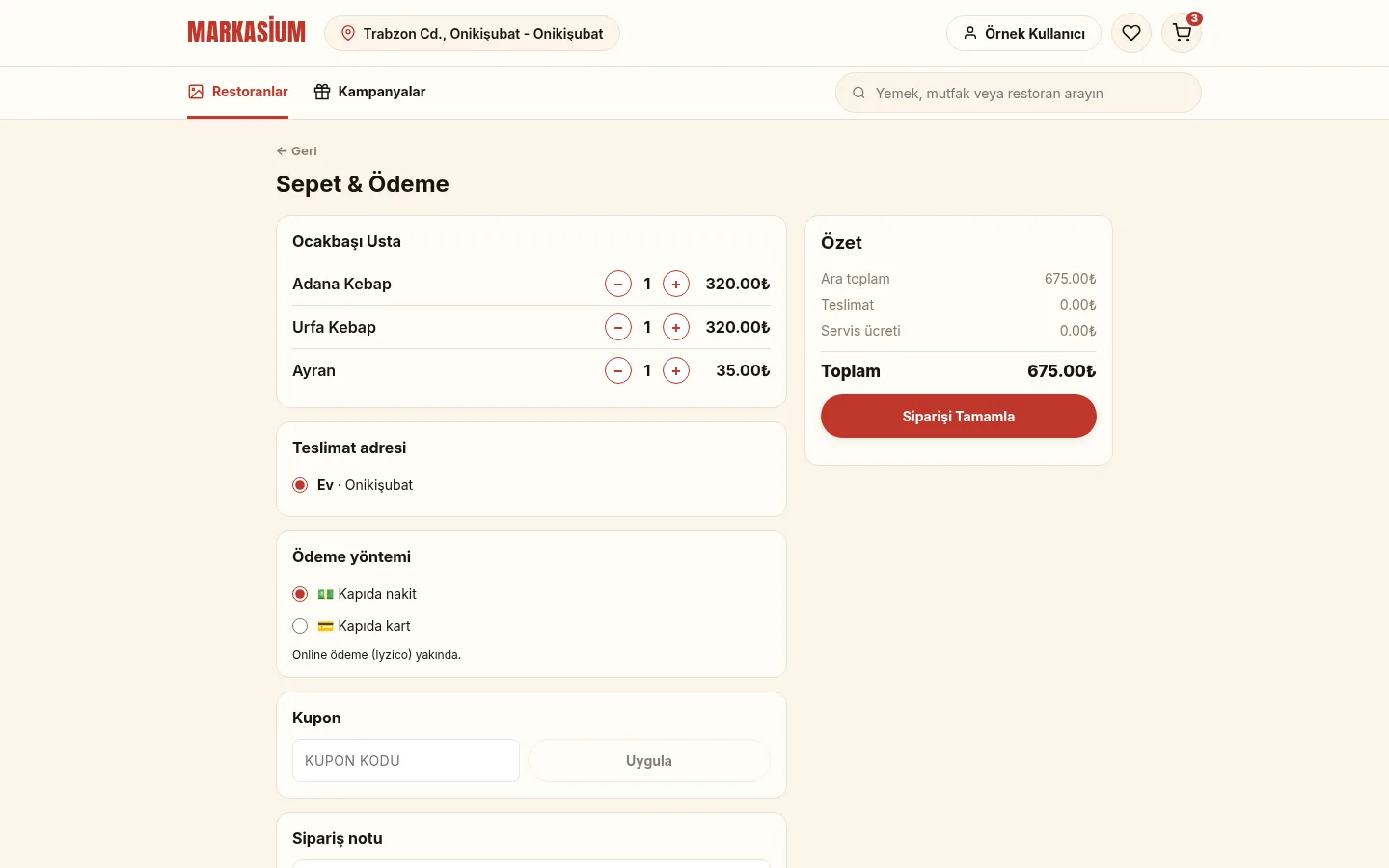
Cart and checkout: items, delivery address, payment method, order summary
CCustomer web · cart and checkout
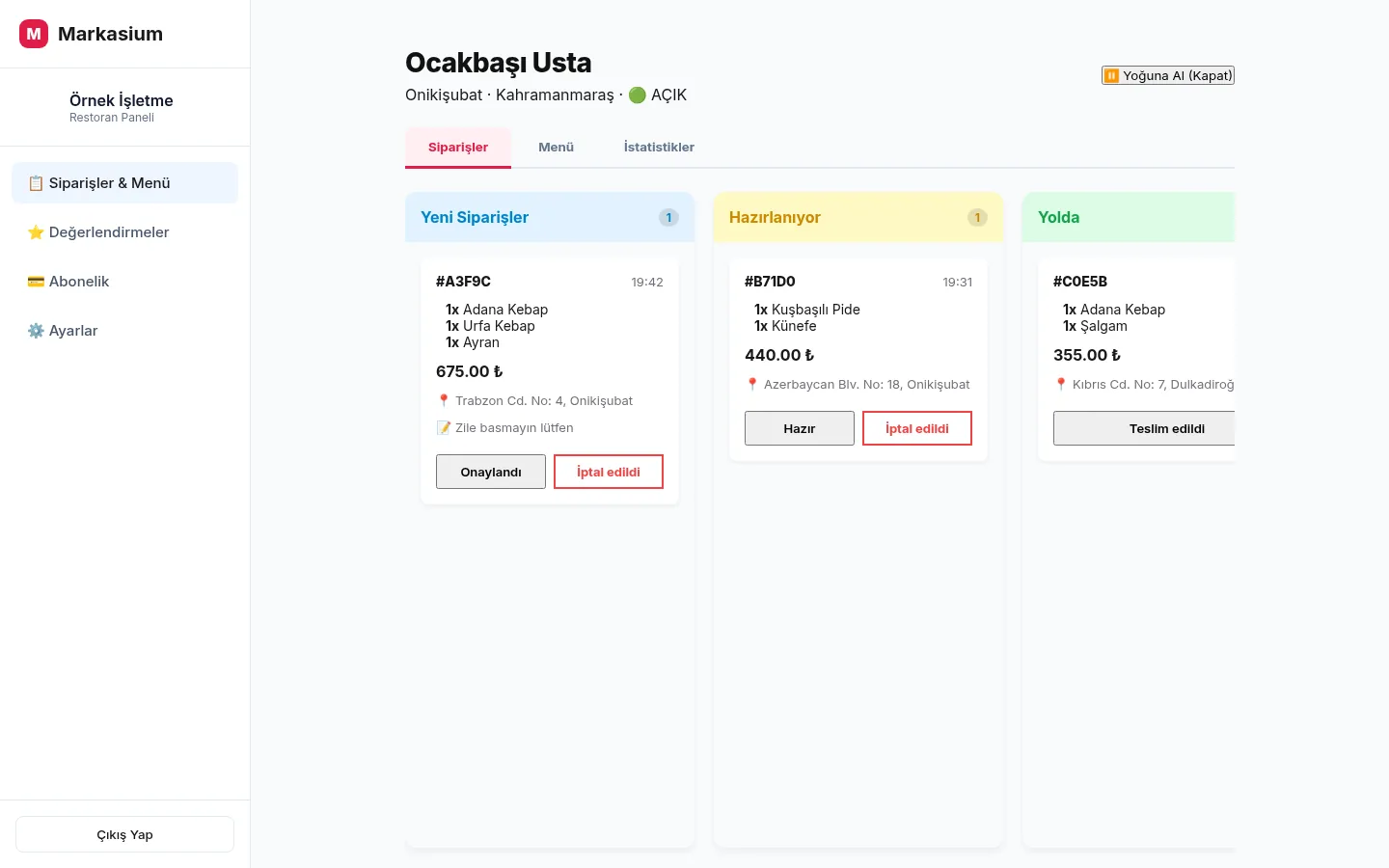
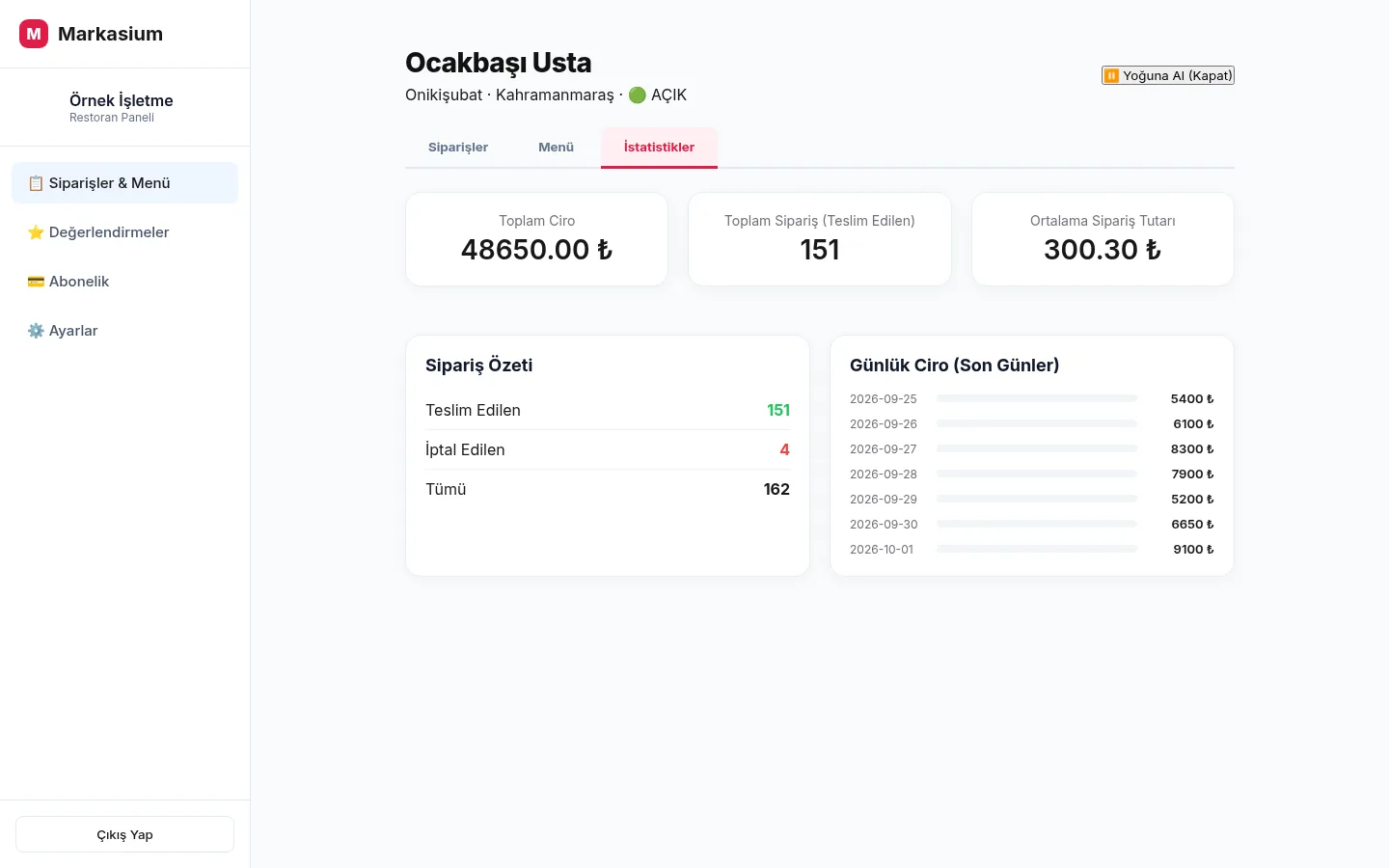
Restaurant panel order board by status: new, preparing, on the way
DRestaurant panel · orders
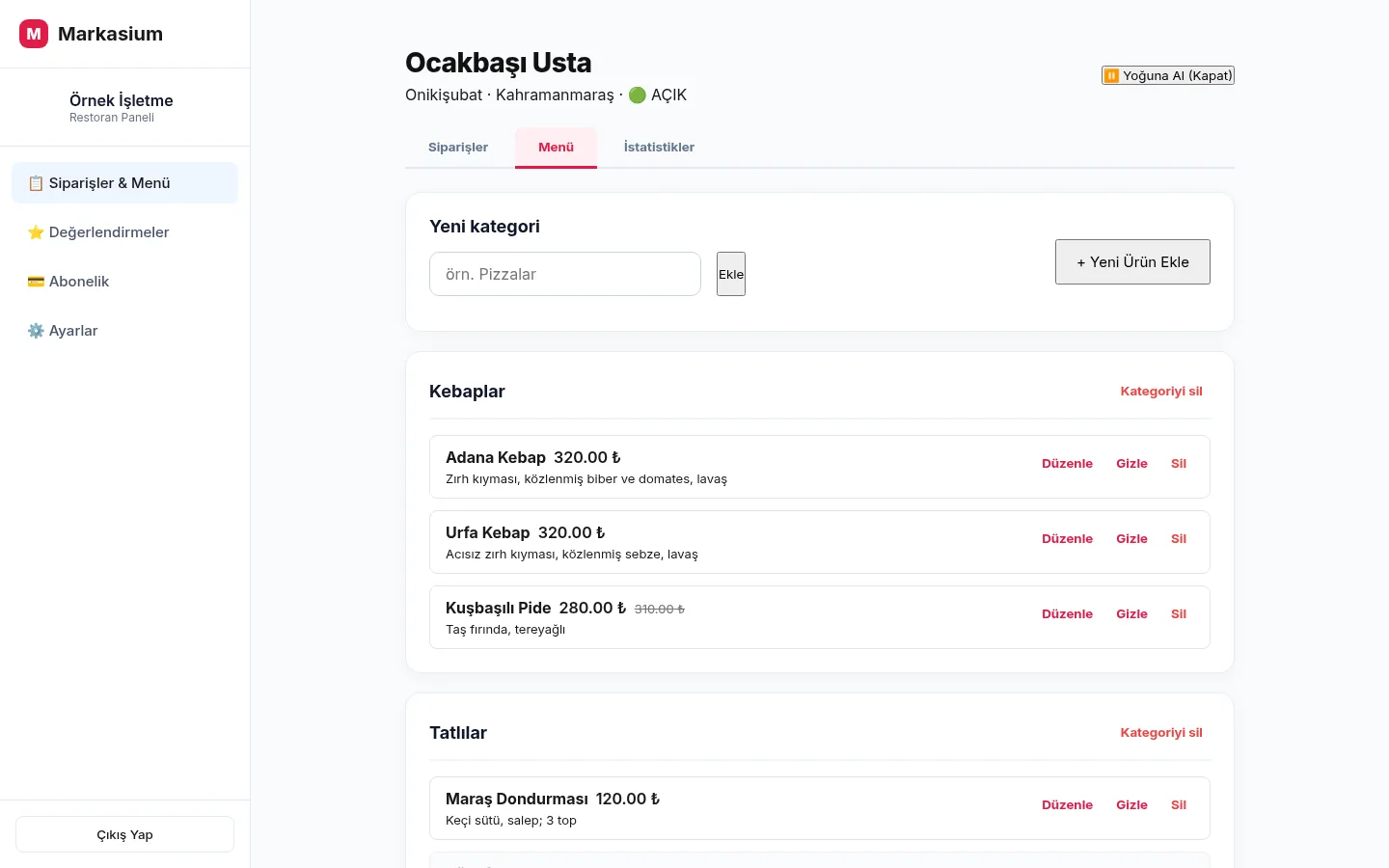
Restaurant panel menu management: categories, items, edit, hide, delete
ERestaurant panel · menu
Restaurant panel revenue, order summary and daily revenue
FRestaurant panel · statistics

02Schema and notes

DOCKER NETWORK CUSTOMER WEB:3000 RESTAURANT PANEL:3001 APISpring Boot · :8080 MARIADBorders · menus · plans REDISsessions · refresh tokens REVENUE MODEL · NO COMMISSION, SUBSCRIPTION
  1. Three services on one Docker network: customer web, restaurant panel, API.
  2. Business logic and the order engine live in the Spring Boot API.
  3. Authentication lives in the API: ES256-signed JWTs, refresh tokens in Redis. Keycloak was removed in 2026-10.
  4. Order, menu and subscription data in MariaDB.
  5. Revenue model: subscription, not commission.

03Parts list7 parts

ItemPartDescription
01Customer webRestaurant listing, ordering · :3000
02Restaurant panelOrder, menu and subscription management · :3001
03APIBusiness logic and order engine · :8080
04IdentityES256 JWT, role claims, HttpOnly cookies
05SessionsRedis: refresh tokens and single-session records
06DatabaseMariaDB
07DeploymentDocker Compose, single network

04Notes3 notes

NoNoteTopic
N1Verifying the Iyzico callbackVerifying the payment without trusting the callback; refunds for double payments, catching lost callbacks
N2From Keycloak to own JWTRemoving Keycloak and signing ES256 JWTs; why, decisions, the validation chain
N3Single session and refreshAtomic refresh rotation, one active session, a separate cookie per panel

—End of sheetdrawn by MUHAMMEDPYZ
Sheet 03 / 10

NYXBOT

Modular moderation and management bot for Discord servers. The bot and the web panel share the same data; each server only registers commands for the modules it has enabled.

Subject
Bot · Backend
Platform
Discord · Web panel
Source
Private repo
Date
2026
Status
In development

NyxBot is a moderation and management bot for Discord servers. Commands are split into nine modules: moderation, security, economy, giveaways, music, private rooms, fun, utilities and management. Admins switch modules on and off in an Express-based web panel; the bot registers only the enabled modules' commands per server, so a disabled module's commands never appear in the menu. The bot and the panel share one MariaDB database and send events to each other over Redis, so a setting saved in the panel reaches the bot immediately. Replies are rendered with Discord Components V2. The backend has tests, and a security pass closed a privilege escalation and a permission gap in prefix commands. The notes cover command registration, bot–panel sync and that security pass.

01Views6 views

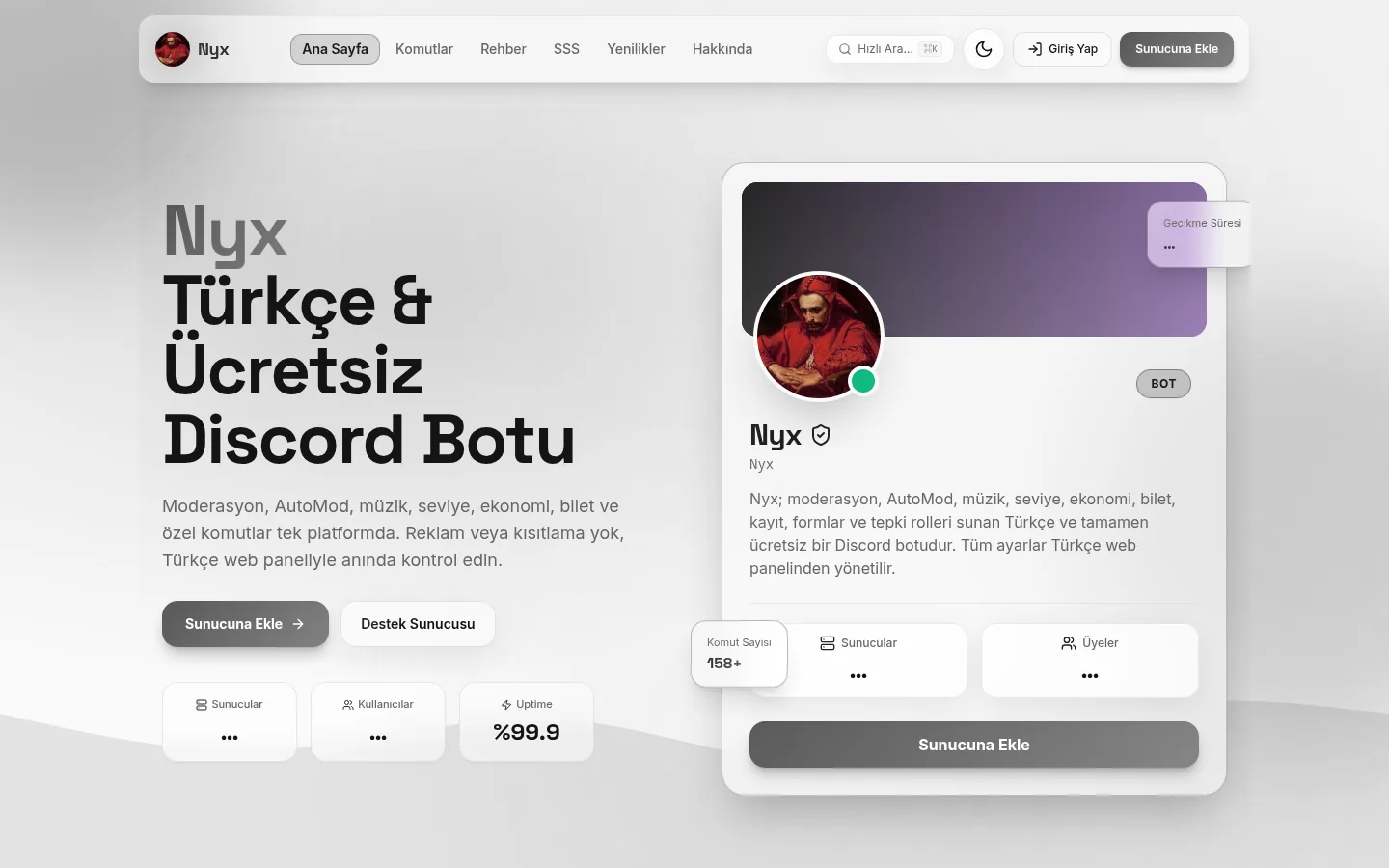
Nyx landing page: Turkish, free Discord bot headline and bot profile card
AWeb · home
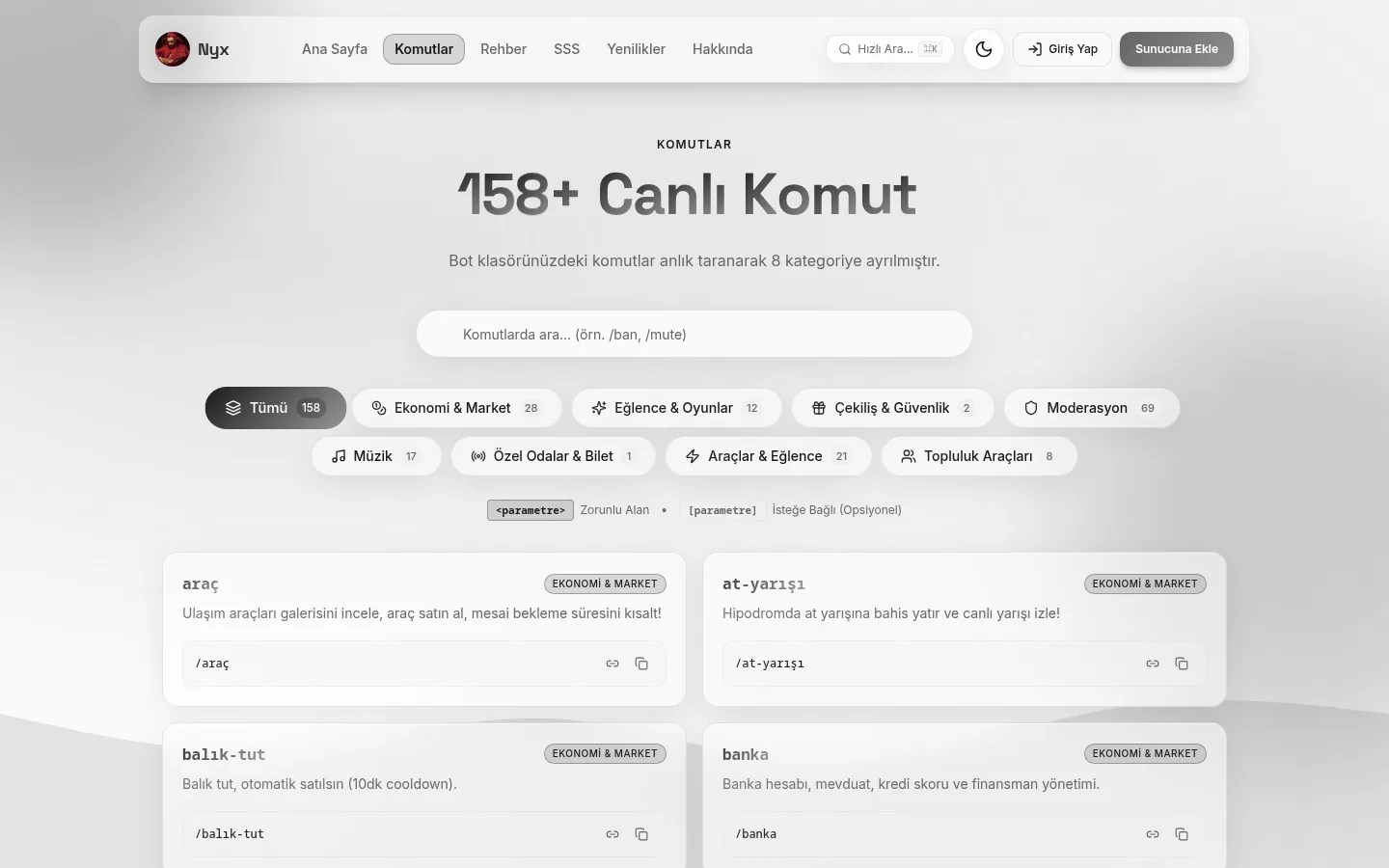
Nyx command list: 158 commands in 8 categories with search and category filters
BWeb · command list
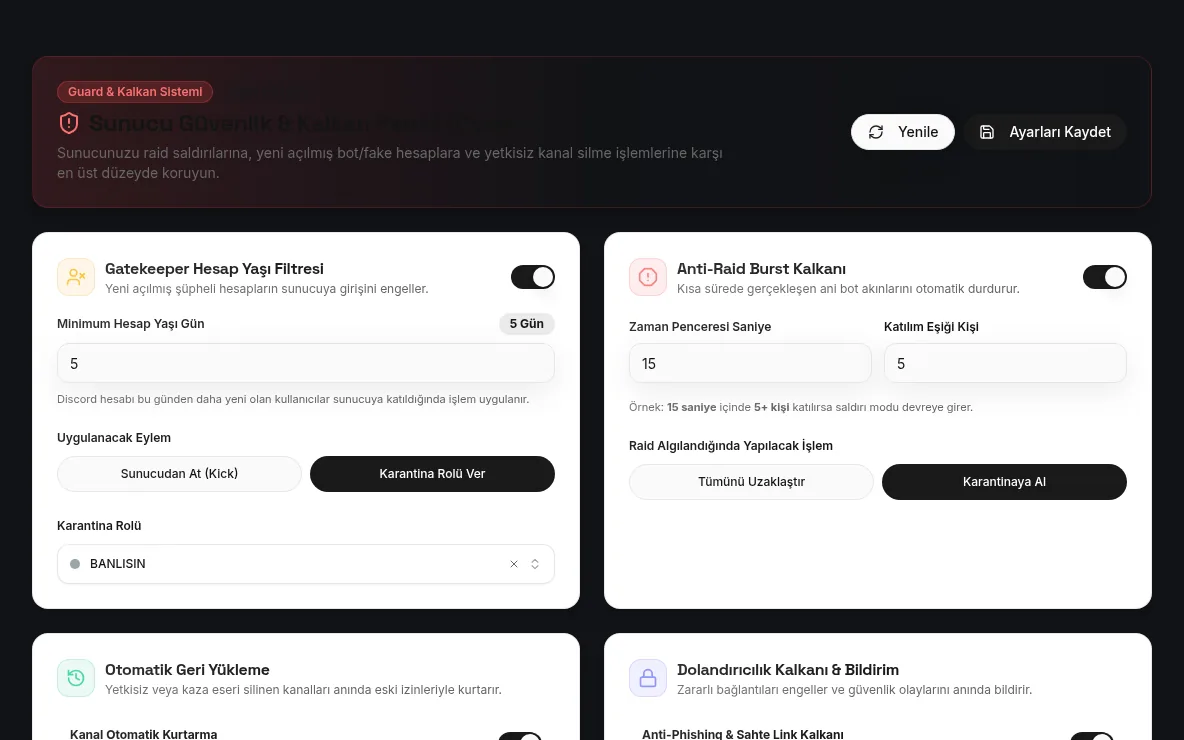
NyxBot web panel guard system: account age filter and anti-raid settings
CWeb panel · security
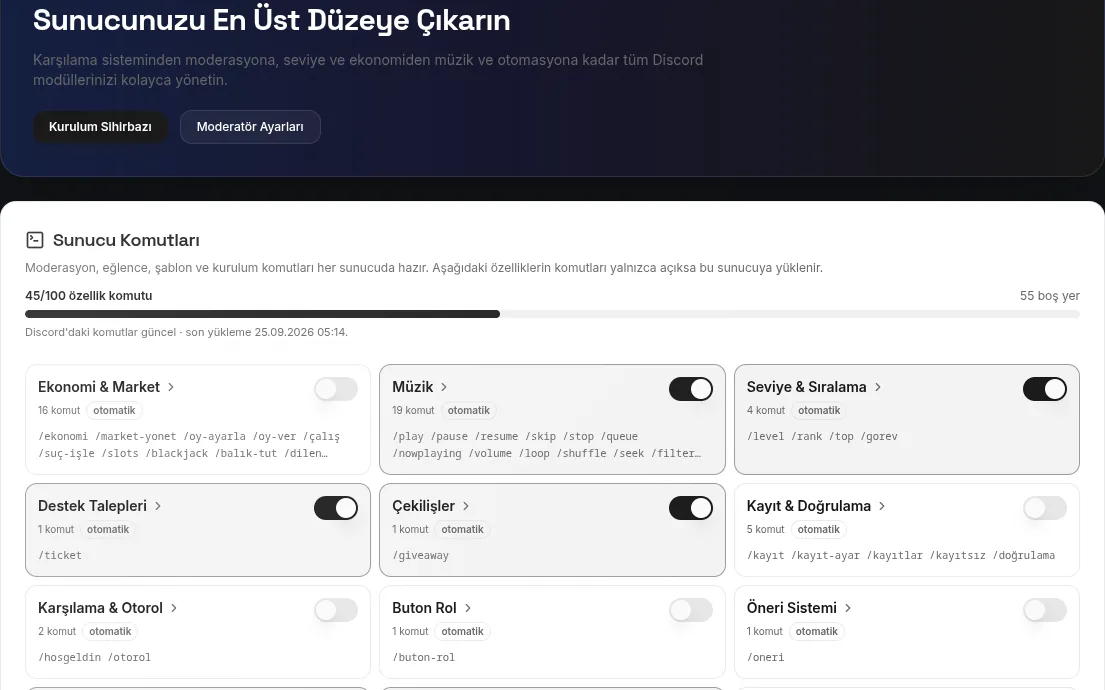
NyxBot web panel command modules with on/off switches
DWeb panel · command modules
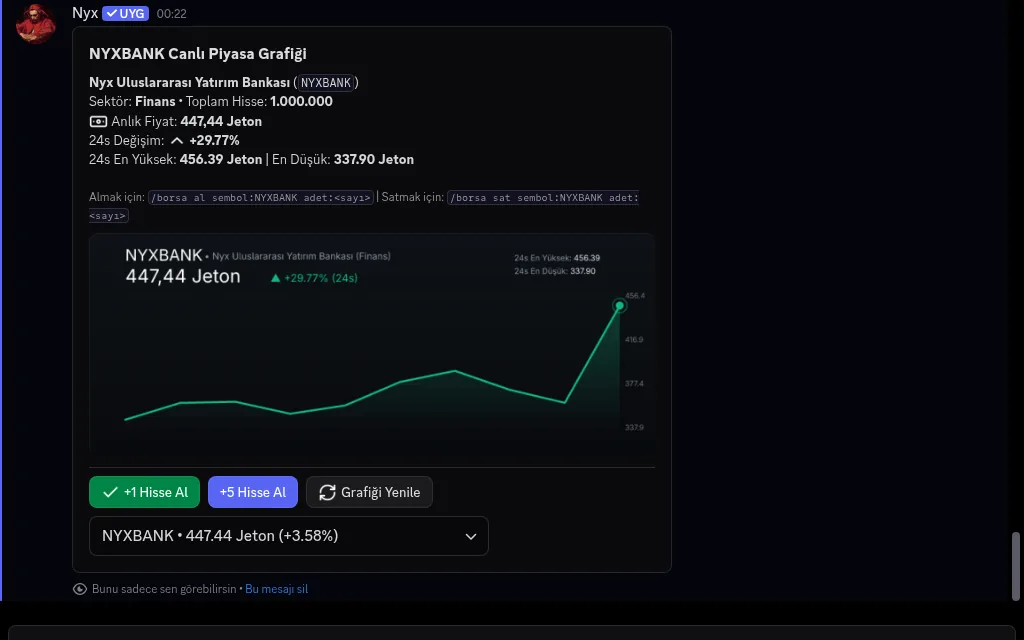
Live market chart message sent by NyxBot in Discord
EDiscord · stock chart
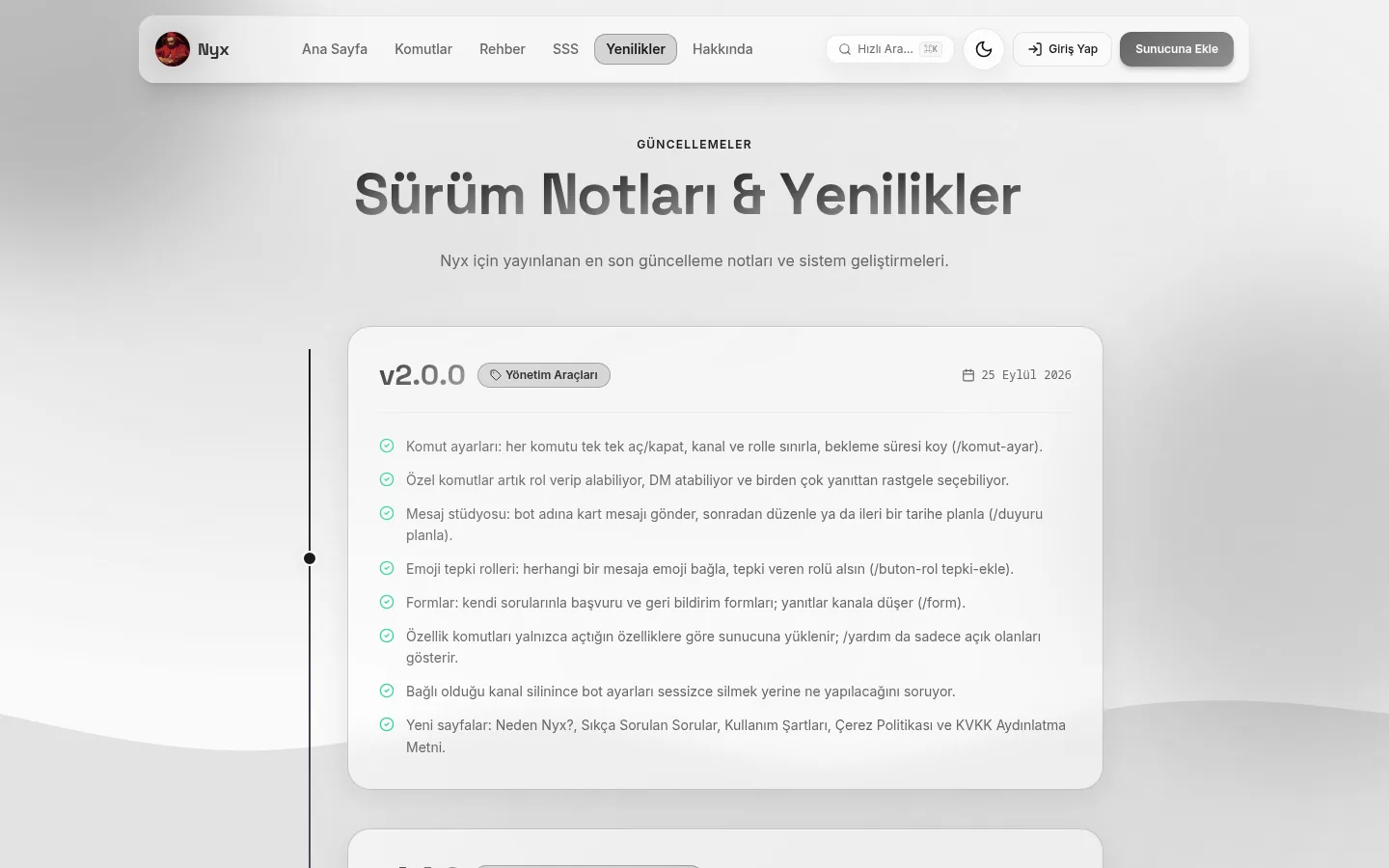
Nyx release notes page: v2.0.0 change list
FWeb · release notes

02Schema and notes

DISCORDgateway · REST BOTdiscord.js · 9 modules WEB PANELExpress API MARIADBpersistent data REDIScache MODULE LOADER · DISABLED MODULES REGISTER NO COMMANDS
  1. Commands load per module; a module disabled on a server registers no commands.
  2. The bot and the Express-based web panel use the same database.
  3. Persistent data in MariaDB, cache in Redis.
  4. Replies are built with Discord Components V2.
  5. Privilege escalation and prefix permission holes were closed; the backend has tests.

03Parts list5 parts

ItemPartDescription
01Command modulesModeration, security, economy, giveaways, music, private rooms, fun, utilities, management
02Module loaderRegisters enabled modules' commands per server
03CardsWelcome, rank and economy cards; 20 designs, 26 colours
04Web panelExpress API, server settings and logs
05Data layerMariaDB + Redis (ioredis)

04Notes3 notes

NoNoteTopic
N1Per-guild command registrationA disabled module's slash commands never show in the menu; one PUT, batching, hash comparison
N2Bot · panel syncA setting saved in the panel reaches the bot at once; Redis pub/sub, targeted cache invalidation
N3Security passPrivilege escalation via an unverified token, the prefix permission gap, the transcript iframe; how they were found and closed

—End of sheetdrawn by MUHAMMEDPYZ
Sheet 04 / 10

ACHIEVEMENT HUNTER

Desktop app that tracks Steam achievements, plus the REST API behind it. It shows a transparent achievement panel in game, opened with Shift+Tab.

Subject
Desktop · Backend
Platform
Windows
Source
Private repo
Date
2026
Status
In development

Achievement Hunter is a desktop app for tracking Steam achievements while playing, plus the REST API behind it. The app finds installed games from Steam's own files, tells which game is running from window titles, and shows a transparent in-game panel opened with Shift+Tab. Progress on the achievements the user tracks is read through steamworks4j every few seconds, and reads speed up as an achievement nears its target. The desktop side is Java and JavaFX, the API is Spring Boot 3.2; authentication uses Spring Security and JWT, data lives in MySQL and Redis. The notes cover live achievement tracking and finding the running game without the Web API.

01Views3 views

Book Of Achievements website home page
AWeb · home
Book Of Achievements wiki page: search box over game covers
BWeb · wiki
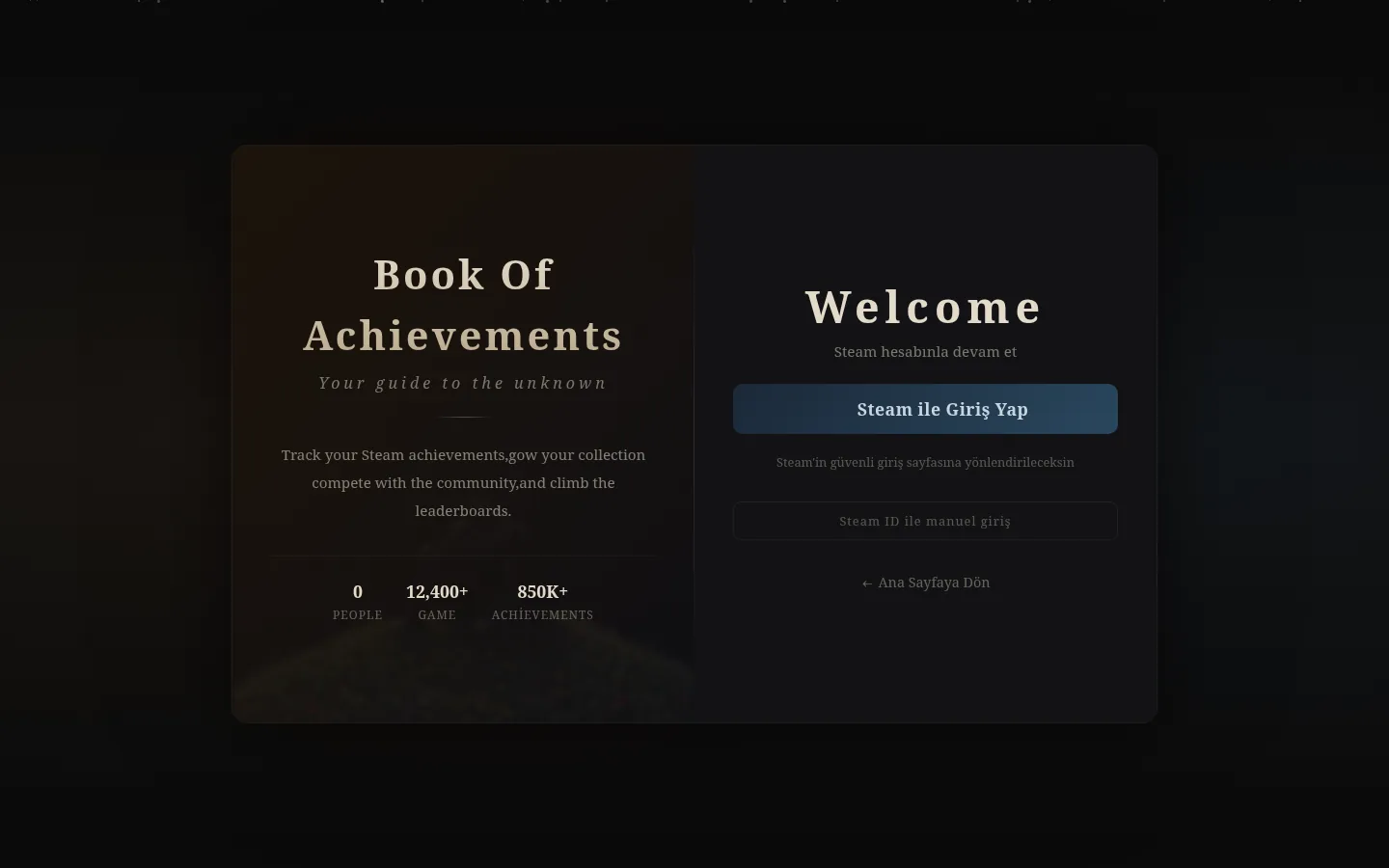
Book Of Achievements sign-in screen with the Steam sign-in button
CWeb · Steam sign-in

02Schema and notes

DESKTOPJavaFX 21 OVERLAYShift+Tab · multi-monitor CORE APISpring Boot · 22 controller MYSQLJPA / Hibernate REDIScache STEAM WEB APIsync JWT
  1. Core API: Spring Boot 3.2, 22 controllers, JWT auth with Spring Security.
  2. Data in MySQL (JPA / Hibernate), cache in Redis.
  3. Game and achievement data sync with the Steam Web API.
  4. Desktop app in JavaFX 21; data loads asynchronously with CompletableFuture.
  5. jpackage builds a Windows .exe that needs no Java install.

03Parts list5 parts

ItemPartDescription
01Steam serviceAutomatic Steam sign-in, data fetching
02Game detectionDetects the running game
03OverlayShift+Tab panel, global hotkeys, multi-monitor
04Core APIREST endpoints, JWT, forum and economy system
05DataMySQL + Redis

04Notes2 notes

NoNoteTopic
N1Live achievement trackingReading Steam stats while the game runs; polling that speeds up near the target
N2Detecting the running gameDetecting installed and running games without the Web API; appmanifest, window titles

—End of sheetdrawn by MUHAMMEDPYZ
Sheet 05 / 10

TADINDA

“Scan, learn, eat safely.” Mobile and web app for tracking nutrition and allergies. Product barcodes are scanned, and ingredients and allergens are analysed with a local language model.

Subject
Mobile · Backend
Platform
Android · iOS · Web
Team
2 people
Exhibited
15th R&D Project Fair · Mersin, May 2026
Source
Private repo
Date
2025–2026
Press
istemersin.com ↗
Status
On hold

Tadinda is a mobile and web app that tells whether a scanned product is risky for the user's allergies and diet. Scanning a barcode looks the product up in Open Food Facts and similar open databases; the ingredients text, text read from a label photo and the user's profile are merged. A rule-based engine decides first; if it finds no risk, the result goes to a locally run language model for a second opinion, but the model cannot turn a risky result into a safe one. The app is built with Flutter, the backend with Python and FastAPI. The project was exhibited at the 15th R&D Project Fair on behalf of Sivas Cumhuriyet University. The notes cover the risk engine and the barcode data pipeline.

01Views3 views

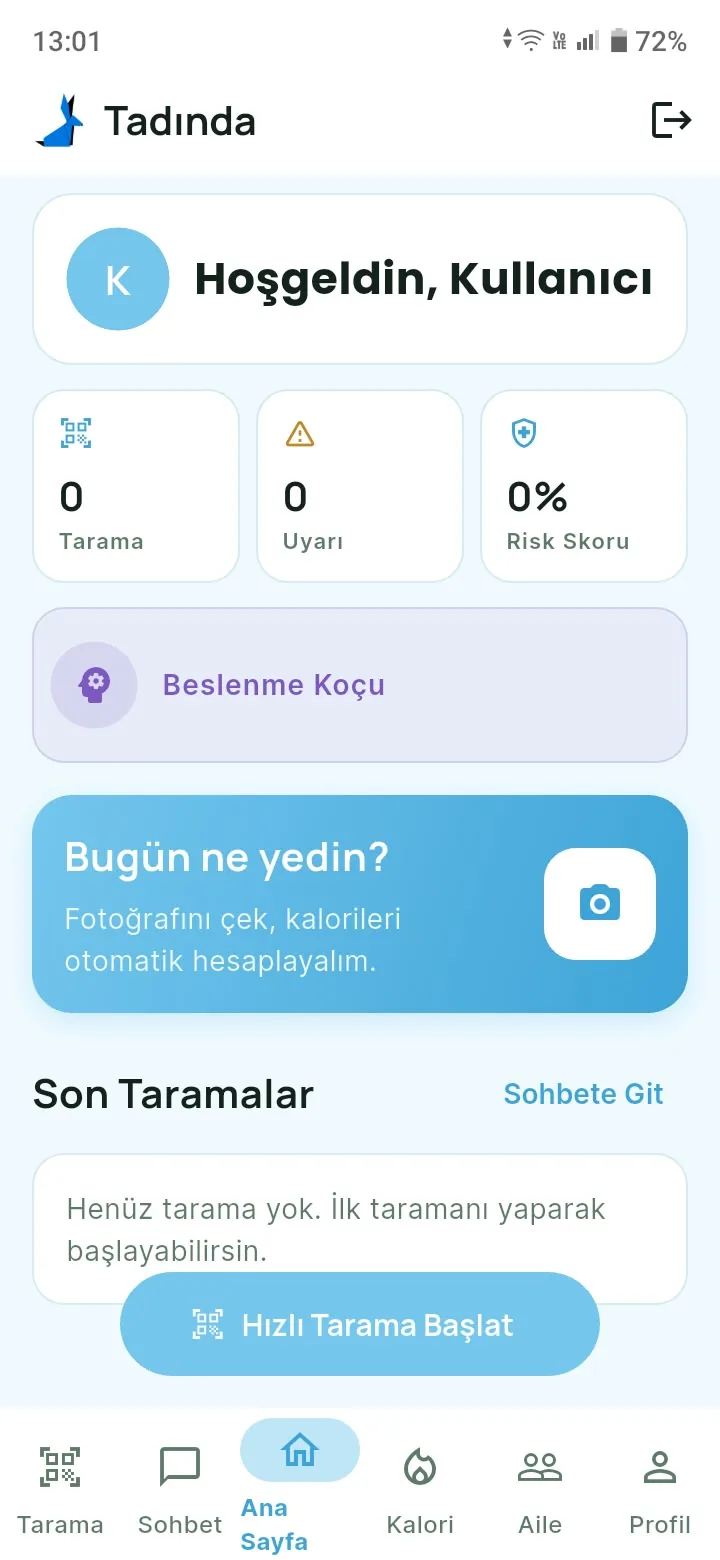
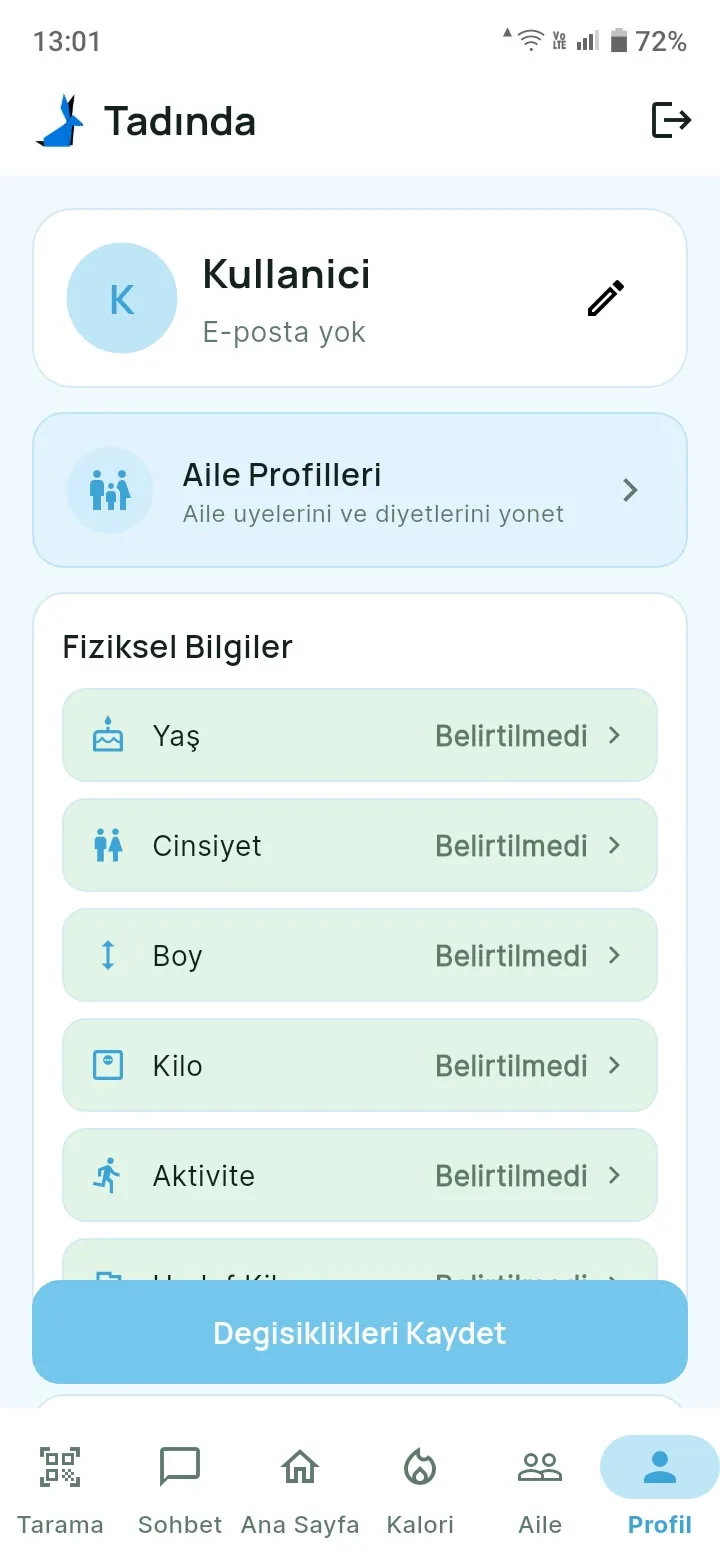
Tadinda mobile home: scan, warning and risk score cards
AMobile · home
Tadinda mobile profile: family profiles and physical info
BMobile · profile
Tadinda mobile splash screen: origami rabbit logo
CMobile · splash

02Schema and notes

MOBILEFlutter · Android/iOS WEBFlutter web APIPython · JWT LOCAL LLMingredients · allergens SPEECH → TEXTvoice input DATABASEscans · reviews · profiles GOOGLE OAUTH 2.0
  1. Exhibited for Sivas Cumhuriyet University at the 15th R&D Project Fair (Mersin University, 5–6 May 2026).
  2. Product info comes from barcode and QR scanning.
  3. Ingredient analysis runs on a local LLM API.
  4. Sessions use JWT; sign-in with Google OAuth 2.0.
  5. Voice input is converted with speech-to-text.
  6. Content is extracted from recipe videos on YouTube, Instagram and TikTok.

03Parts list8 parts

ItemPartDescription
01Barcode scannerProduct info via QR / barcode
02Analysis serviceIngredient and allergen analysis with a local LLM
03Chat assistantNutrition questions
04Video parserExtracts content from recipe videos
05Voice inputSpeech-to-text
06Family profilesDiet and allergy settings for several people
07Nutrition analysisCalories, macro and micronutrients
08IdentityJWT, Google OAuth 2.0

04Notes2 notes

NoNoteTopic
N1Allergen risk engineRule engine first, then the LLM; risky results never go to the LLM
N2Barcode data pipelineLooking up product data across several sources in turn; Redis + MySQL cache, serving stale data

—End of sheetdrawn by MUHAMMEDPYZ
Sheet 06 / 10

COUNTER-TÜRKİYE

CS2 match system on Minecraft. Players install no mods; models and sounds arrive in a resource pack the server sends automatically.

Subject
Game server
Platform
Minecraft · Paper
Team
Co-developed
Source
Private repo
Date
2026
Status
In development

Counter-Türkiye is a Paper plugin that brings Counter-Strike's game systems to Minecraft. Players install no mods: weapon models and sounds arrive through a resource pack the server sends automatically. Weapons use hitscan and spray patterns; there is an economy, bomb planting and defusing, round and match flow, and bots that find their own paths. The project is co-developed; the note on this sheet covers the part Muhammedpyz wrote: the CS2-style smoke grenade, bullets carving through smoke, and how the kill feed works out wallbang, smoke, blind and airborne icons.

01Views4 views

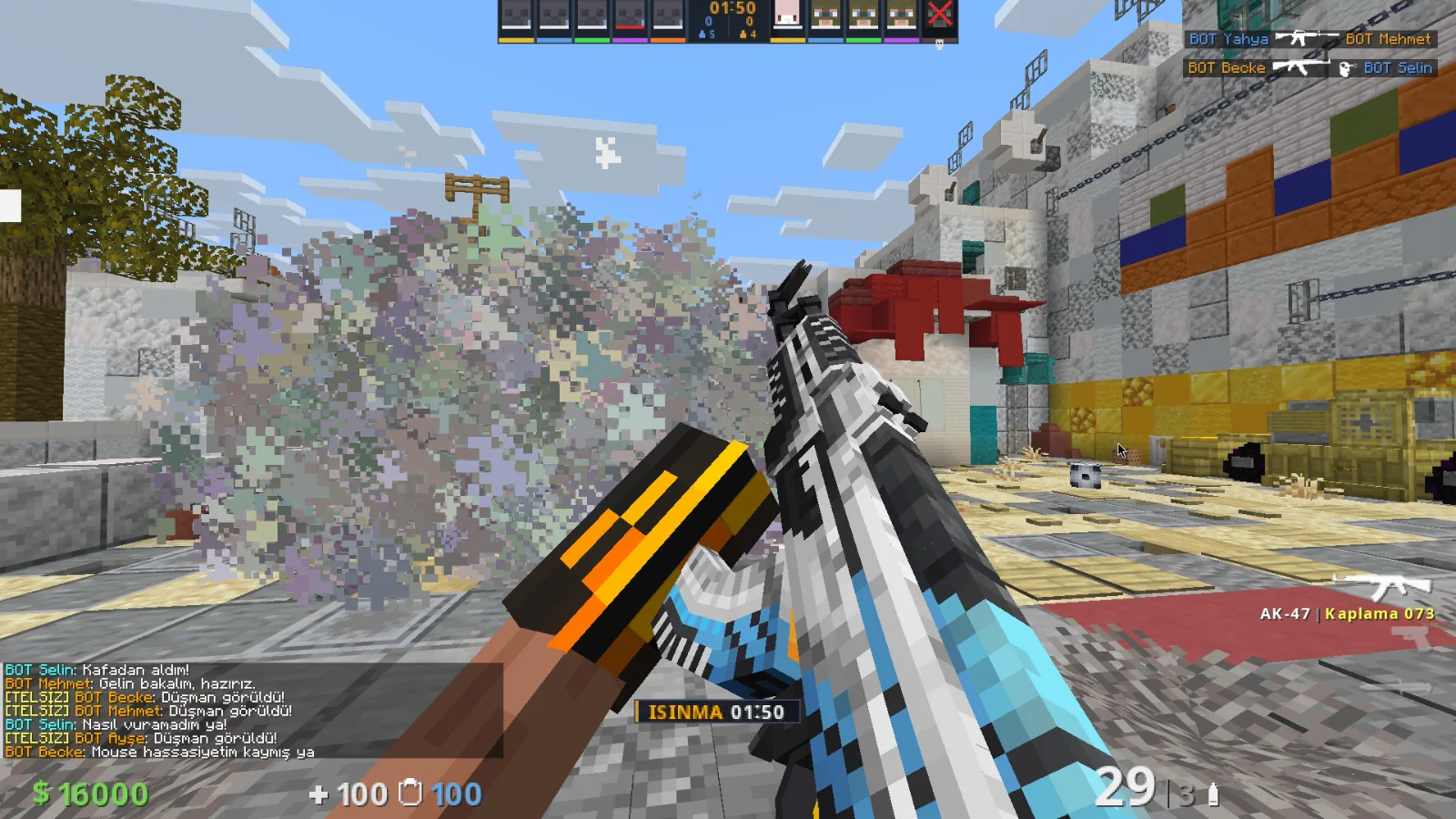
Counter-Türkiye in match: AK-47 skin, score panel, bot radio messages and money, health, armour
AIn match · HUD and killfeed
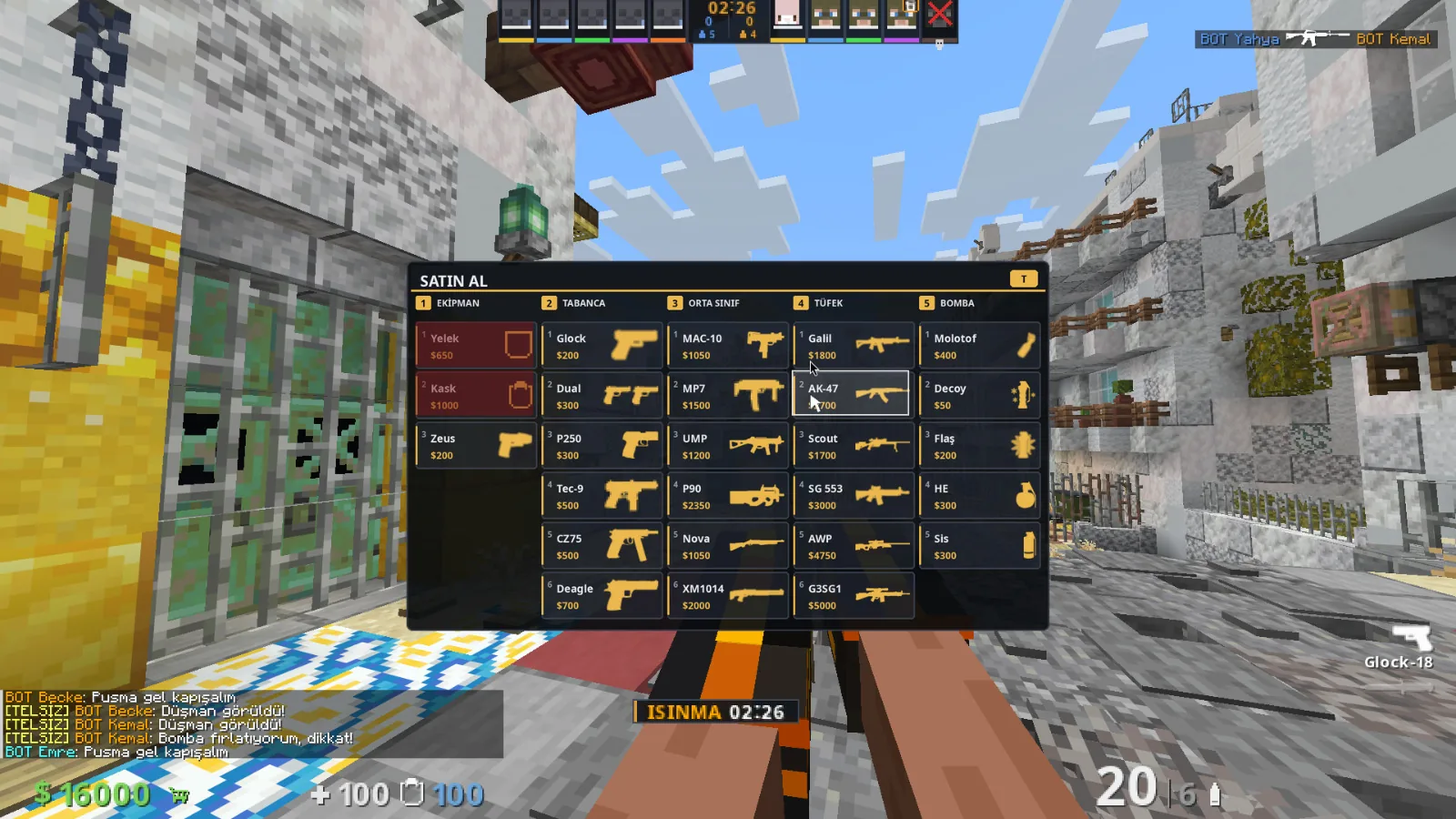
Counter-Türkiye buy menu with equipment, pistol, mid-tier, rifle and grenade columns
BIn match · buy menu
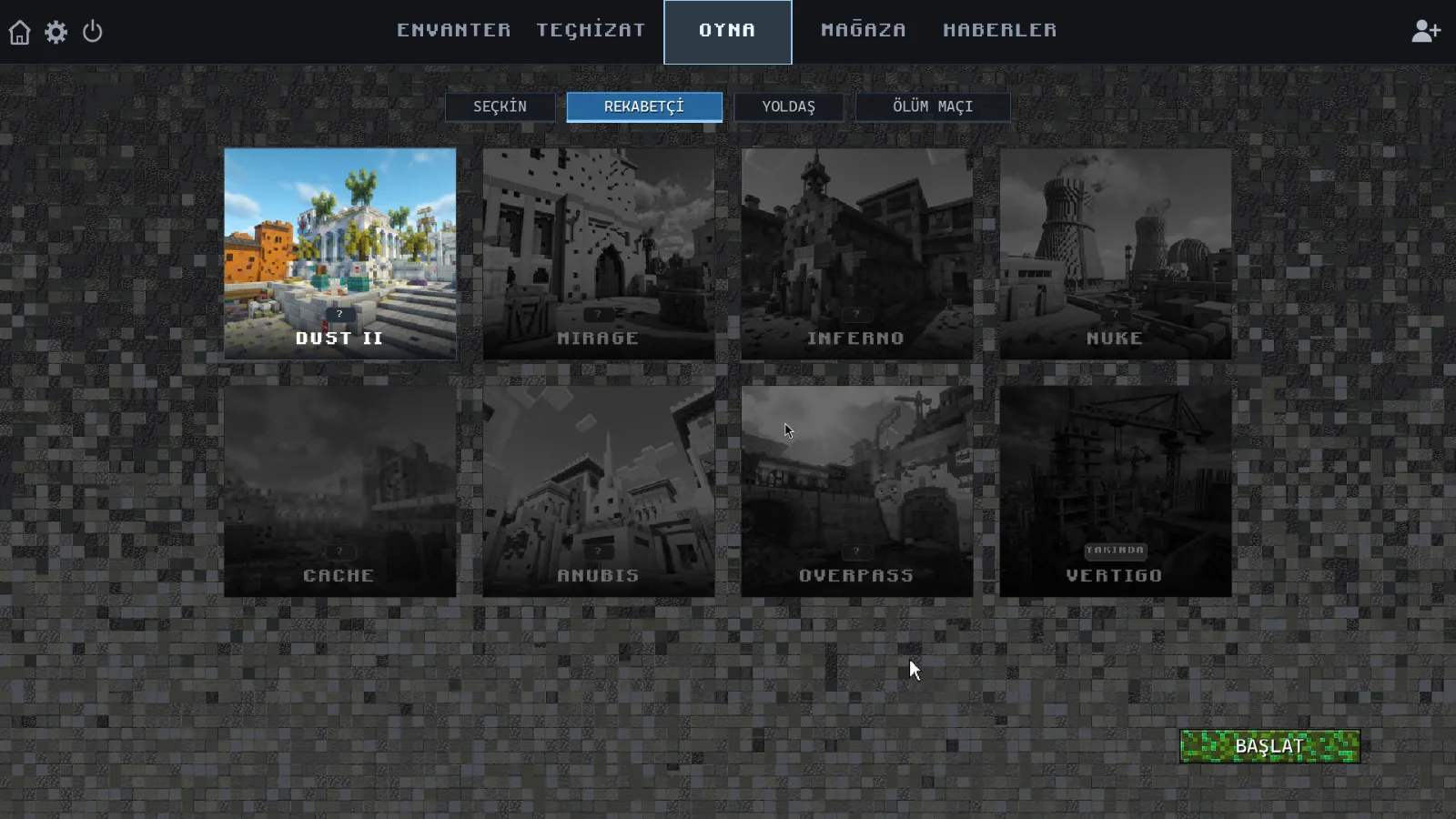
Counter-Türkiye lobby competitive map selection: Dust II, Mirage, Inferno, Nuke and more
CLobby · map selection
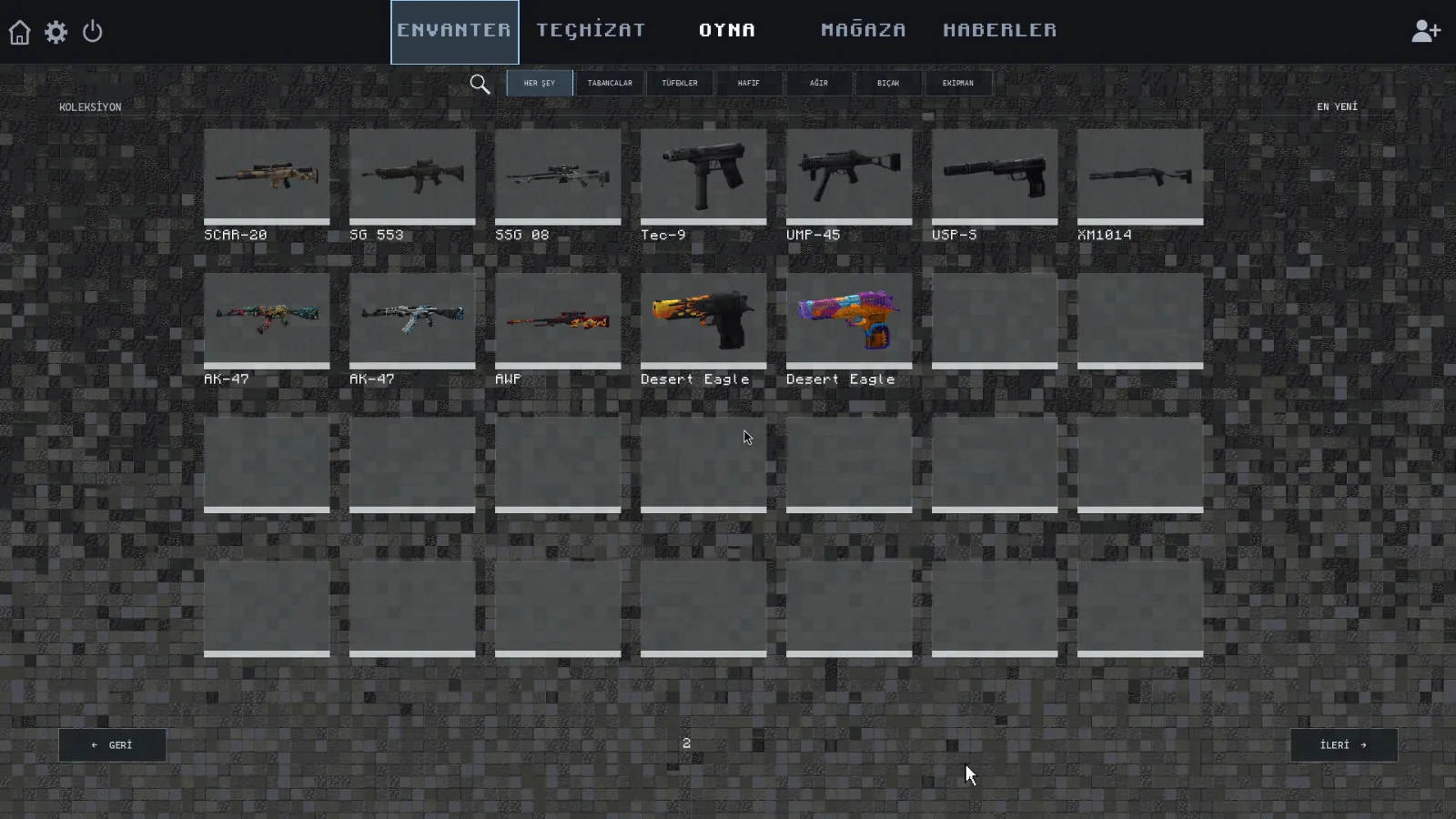
Counter-Türkiye lobby weapon collection inventory
DLobby · inventory

02Schema and notes

PAPER SERVER MATCHlobby · round ECONOMYshop · $16,000 WEAPONShitscan · spray BOTflow-field HUDkillfeed · score VIEWMODELanimation COREPaper API · events · scheduler RESOURCE PACK3D models · sounds PLAYERvanilla client AUTOMATIC NO MODS REQUIRED
  1. Runs as a Paper API plugin; no client-side mods required.
  2. Matches, economy ($16,000 cap), C4 and round flow run on the server.
  3. Bots find paths with flow fields and plan as a team by T/CT scenario.
  4. Weapons use hitscan shots, spray patterns and armour penetration.
  5. The server sends the resource pack to players automatically.

03Parts list6 parts

ItemPartDescription
01Match and lobbyMatchmaking, team selection, voting, spectator mode
02Economy and shopRewards, buy time, defuse kit
03Weapons and damageHitscan, spray patterns, grenades
04BotsPathfinding, aiming, difficulty levels
05VisualsViewmodel animations, skins
06HUDHealth, armour, ammo, killfeed, scoreboard

04Notes1 note

NoNoteTopic
N1Smoke and kill feedWorking out that a bullet passed through smoke; a tunnel in the smoke, kill feed icons

—End of sheetdrawn by MUHAMMEDPYZ
Sheet 07 / 10

MARKASIUM CS2

Plugin suite that runs eight game modes on a single CS2 server on Linux, plus a server-side anti-cheat. An opponent the player should not see is never sent to them.

Subject
Game server · Security
Platform
CS2 · Linux · CounterStrikeSharp
Source
Private repo
Date
2026
Status
In development

Markasium CS2 is a plugin suite that serves eight game modes (public, retake, deathmatch, AWP, aim, 5v5 match, 1v1 arena, jailbreak) from a single Counter-Strike 2 server on Linux. Switching modes stops the server, leaves only that mode's plugins enabled and starts it again; plugins are never loaded or unloaded at runtime. The first layer of the server-side anti-cheat is denying information: an opponent behind a wall is never sent to the player. Other detections add to an evidence score that decays over time, and staff make the call; there is no automatic punishment. Stats, the credit economy and incidents live in MariaDB, and the server is managed from a web panel. The notes cover mode switching, hiding players behind walls, and why the anti-cheat is built without AI.

01ViewsWeb admin panel · test server data

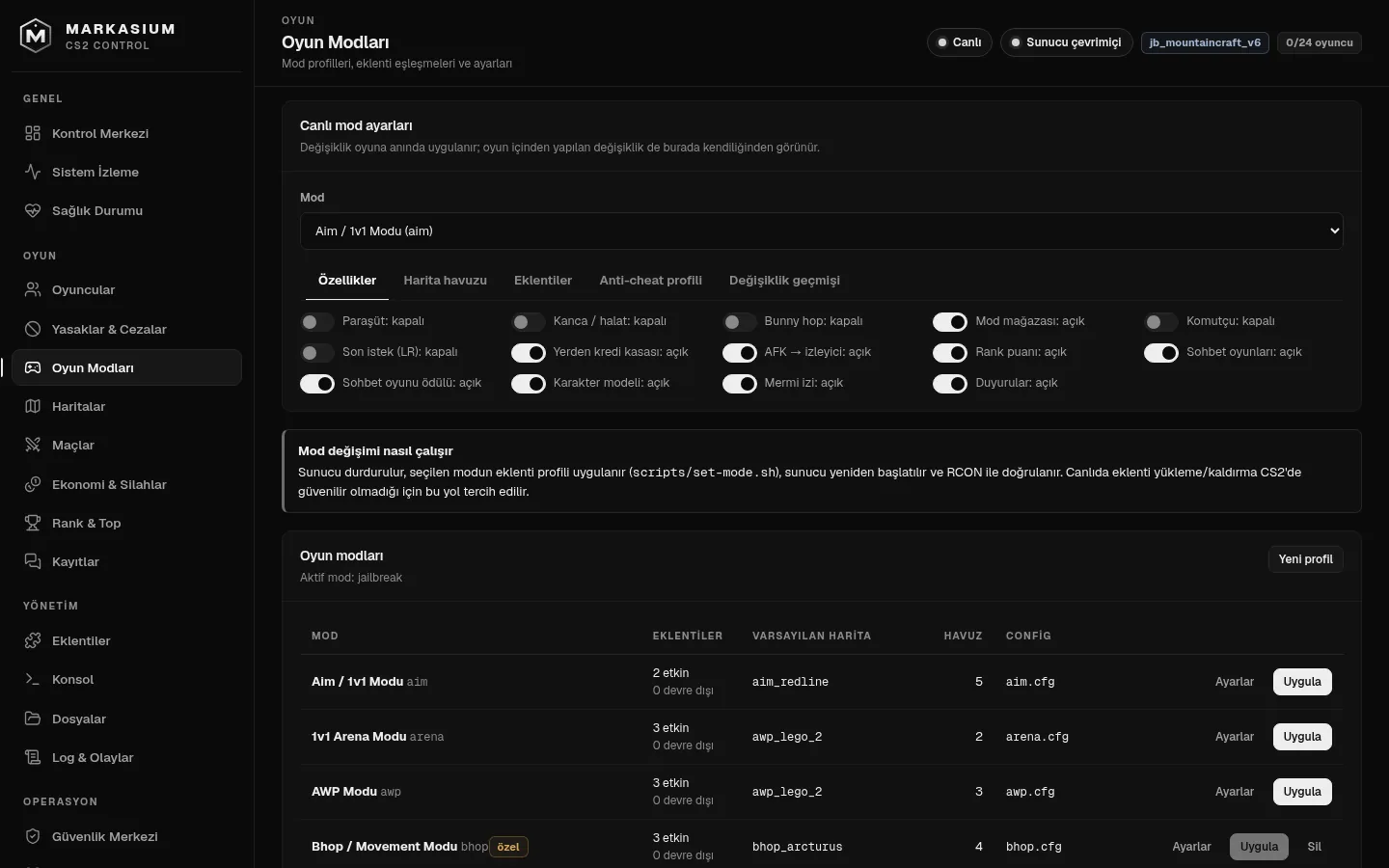
Markasium CS2 web panel game modes: per-mode feature toggles, how mode switching works and the mode list
AWeb panel · game modes
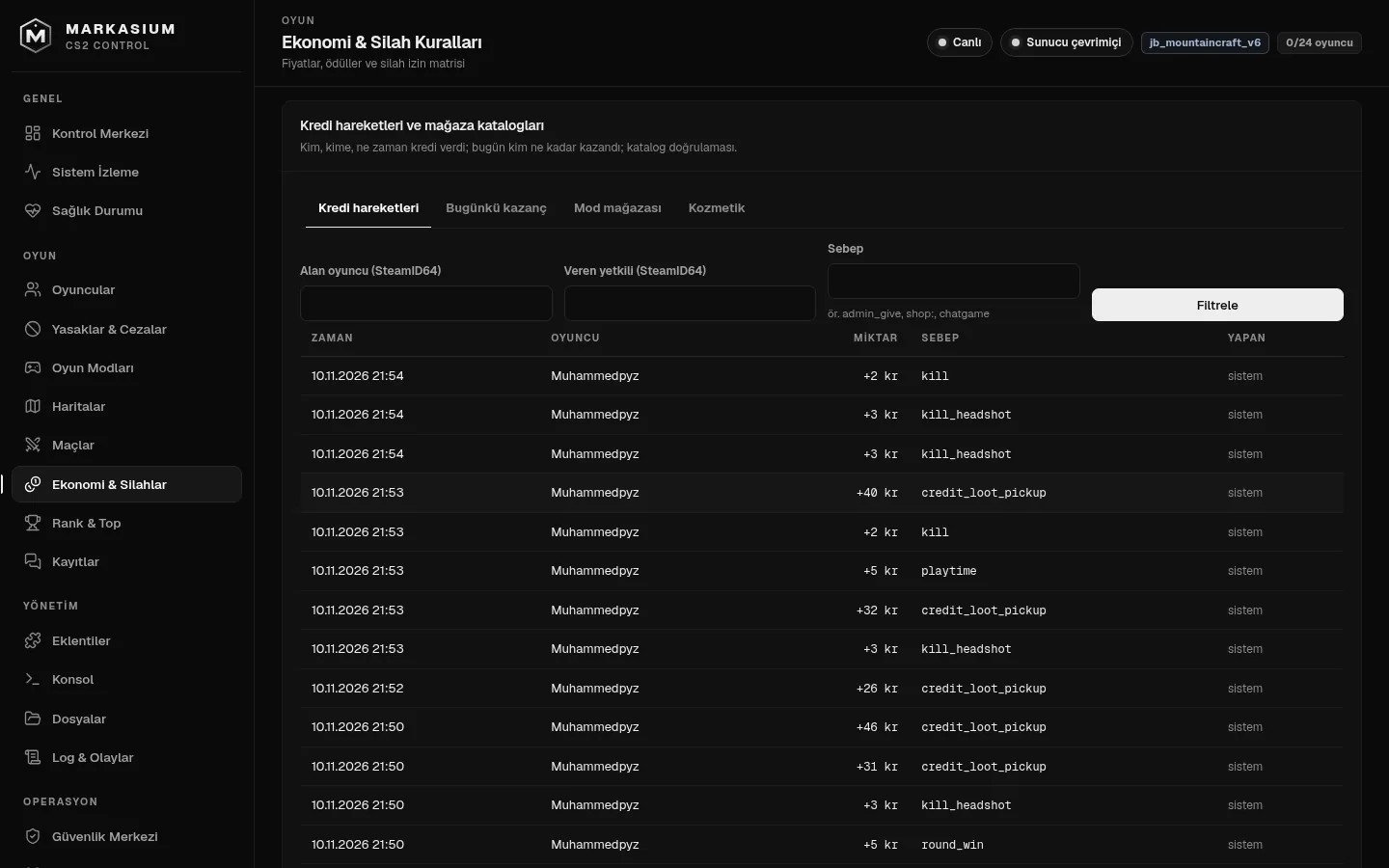
Markasium CS2 web panel credit ledger: player, amount and reason (kill, headshot, playtime)
BWeb panel · credit ledger
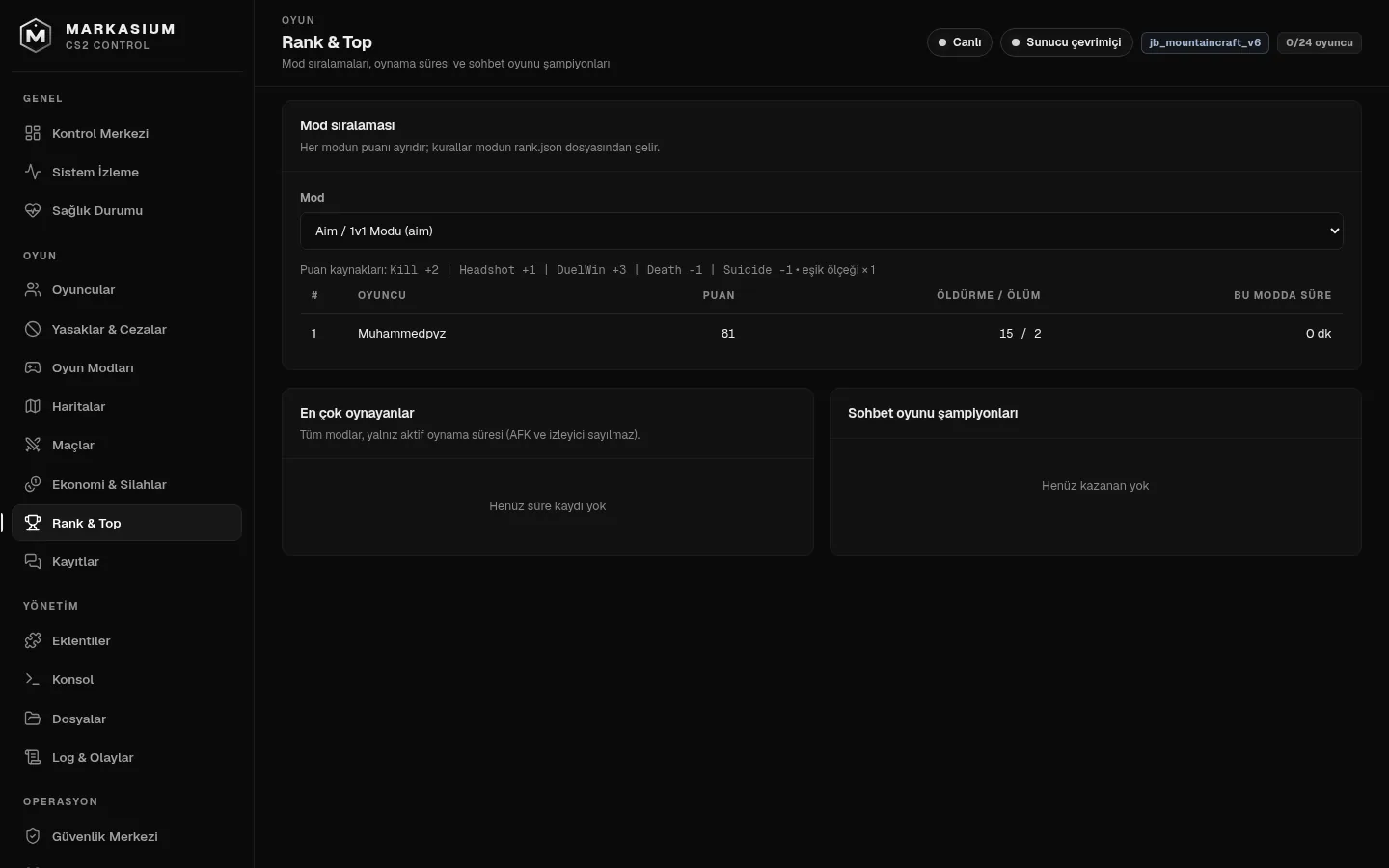
Markasium CS2 web panel mode ranking: score sources, player score and kill/death ratio
CWeb panel · rankings

02Schema and notes

PLAYERSUDP 27015 CS2 SERVER · COUNTERSTRIKESHARP ALLINONECOREmodes · voting · VIP · credits FOWCheckTransmit · line of sight ANTI-CHEATdetectors · evidence score MARIADBstats · incidents DISCORDstaff alerts MODE SWITCH · SERVER RESTARTS WITH A NEW PLUGIN SET
  1. Switching modes restarts the server; plugins are never loaded or unloaded at runtime.
  2. The body, weapons and attached entities of an opponent behind a wall are not sent to the client.
  3. The anti-cheat never punishes automatically; detections add to an evidence score and staff decide.
  4. Stats, the credit economy and security incidents live in MariaDB.
  5. systemd user service, daily backups; the GSLT token sits in a 0600 file.

03Parts list7 parts

ItemPartDescription
01AllInOneCoreModes, map voting, VIP, credit economy, menus · C#
02FOWPacket-level hiding via CheckTransmit, line-of-sight tests against map geometry
03Anti-cheatDetectors, decaying evidence score, staff verdicts
04Mode switcherset-mode.sh and mode manifests
05Web panelExpress + React; live status (SSE), modes, economy, logs, role-based access
06DataMariaDB
07Operationssystemd, daily backups, RCON

04Notes3 notes

NoNoteTopic
N1Eight modes, one serverChanging the plugin set with stop-move-start; the manifest rule, atomic config writes
N2Server-side anti-wallhack (FOW)Never sending the opponent a player shouldn't see; prediction, hysteresis, the footstep rule
N3No automatic bansThree layers instead of AI; a decaying evidence score, staff verdicts

—End of sheetdrawn by MUHAMMEDPYZ
Sheet 08 / 10

PEDER

Session management system for counselling training. Clients, trainee counsellors and supervisors match through a shared calendar; session reports go to the supervisor for approval.

Subject
Backend · Security
Platform
Web · Cloudflare Workers
Source
Private repo
Date
2026
Status
In development

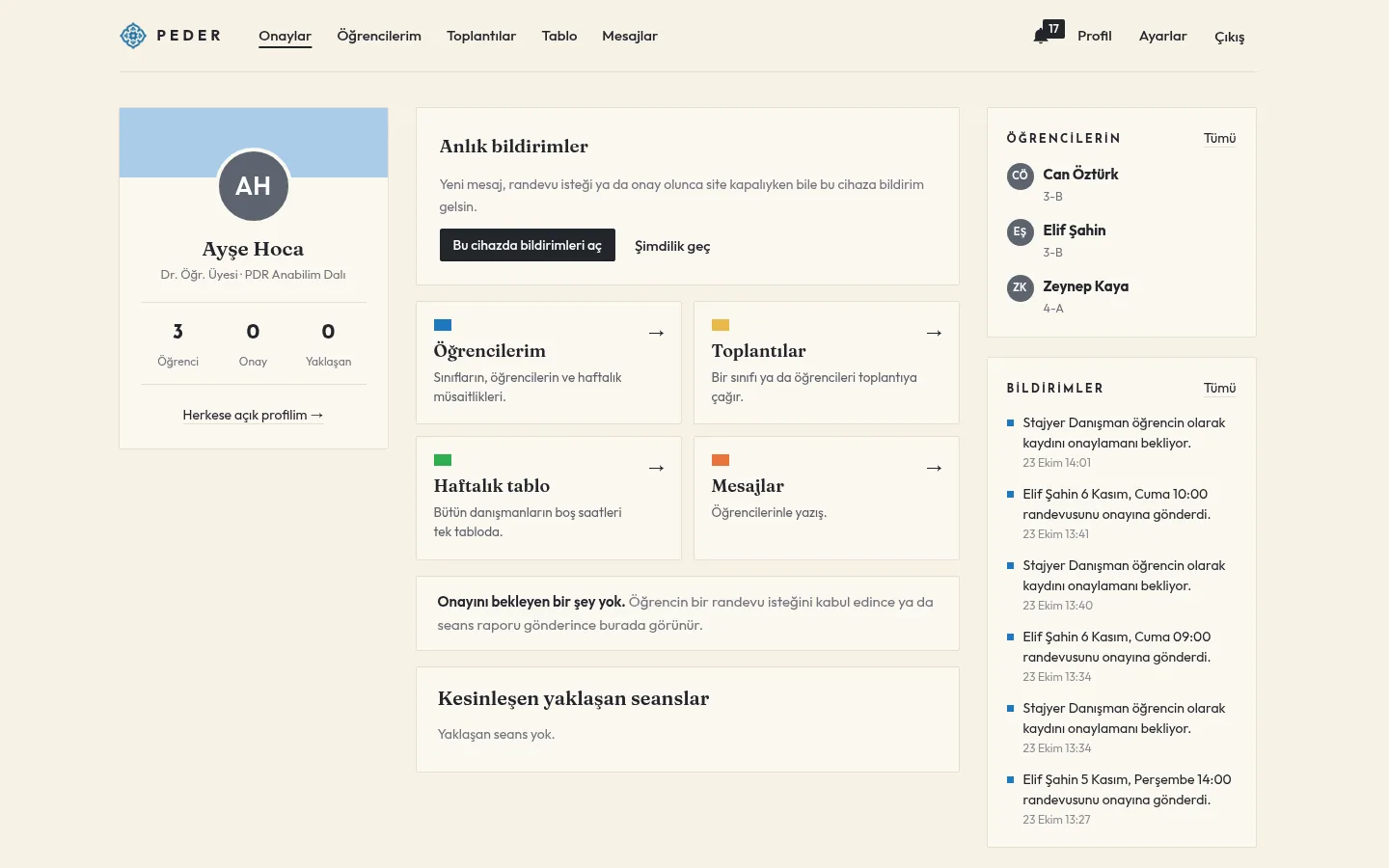
Peder is a session management system that brings together clients, trainee counsellors and supervisors in counselling education. Trainees enter their weekly availability, a client requests a slot from the shared table, the trainee accepts, and the session is confirmed once the supervisor approves; session reports also go to the supervisor for approval. It runs entirely as one Cloudflare Worker with data in D1. Every request passes several security layers before reaching business logic: a violating IP collects penalty points, and enough points lead to a temporary quarantine. Session reports and messages are stored encrypted, and admins sign in with TOTP. The notes cover the penalty engine, a login endpoint that does not leak whether an account exists, and file access.

01ViewsLocal demo · sample data

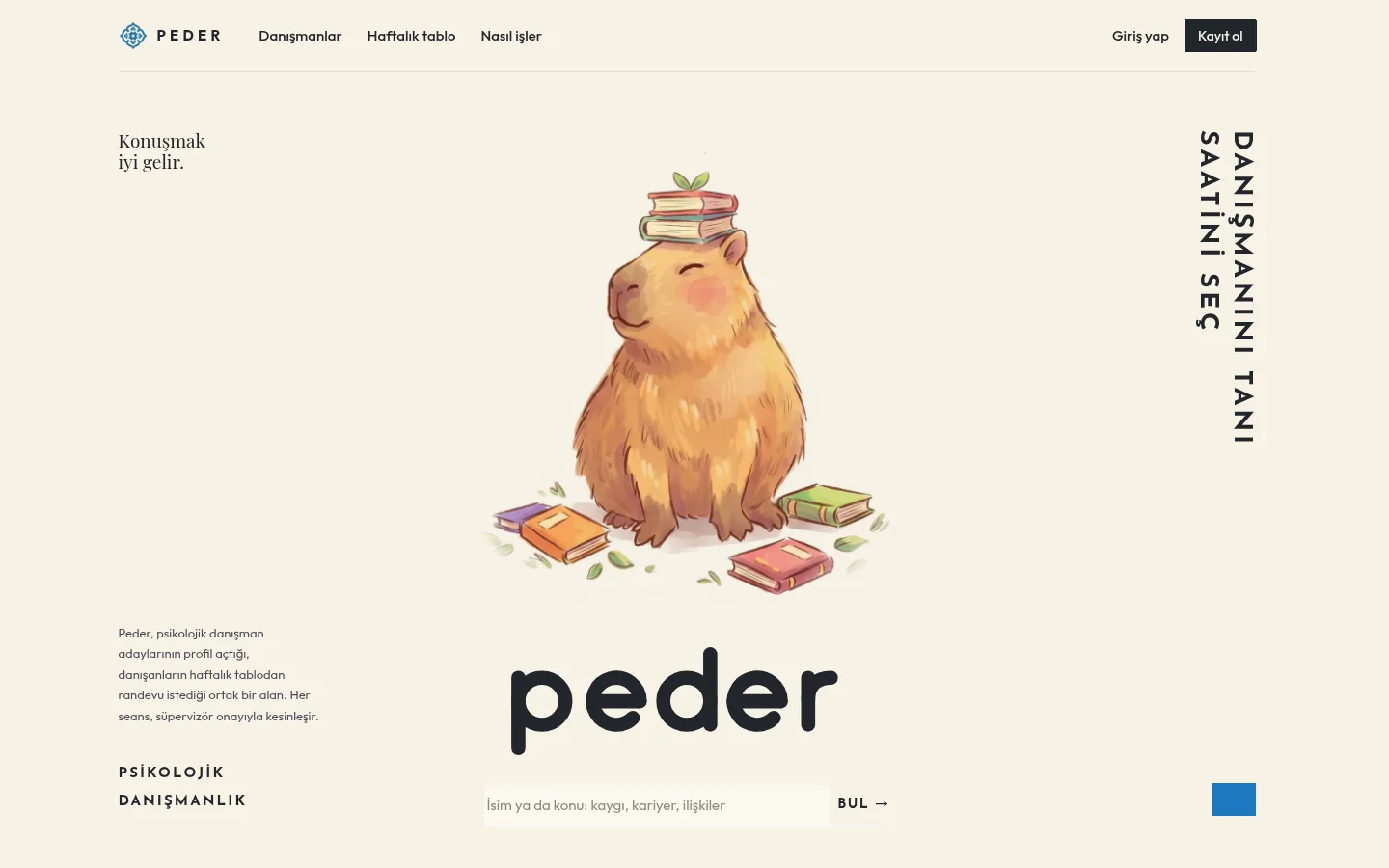
Peder home page: capybara illustration, counsellor search box and short intro
AWeb · home
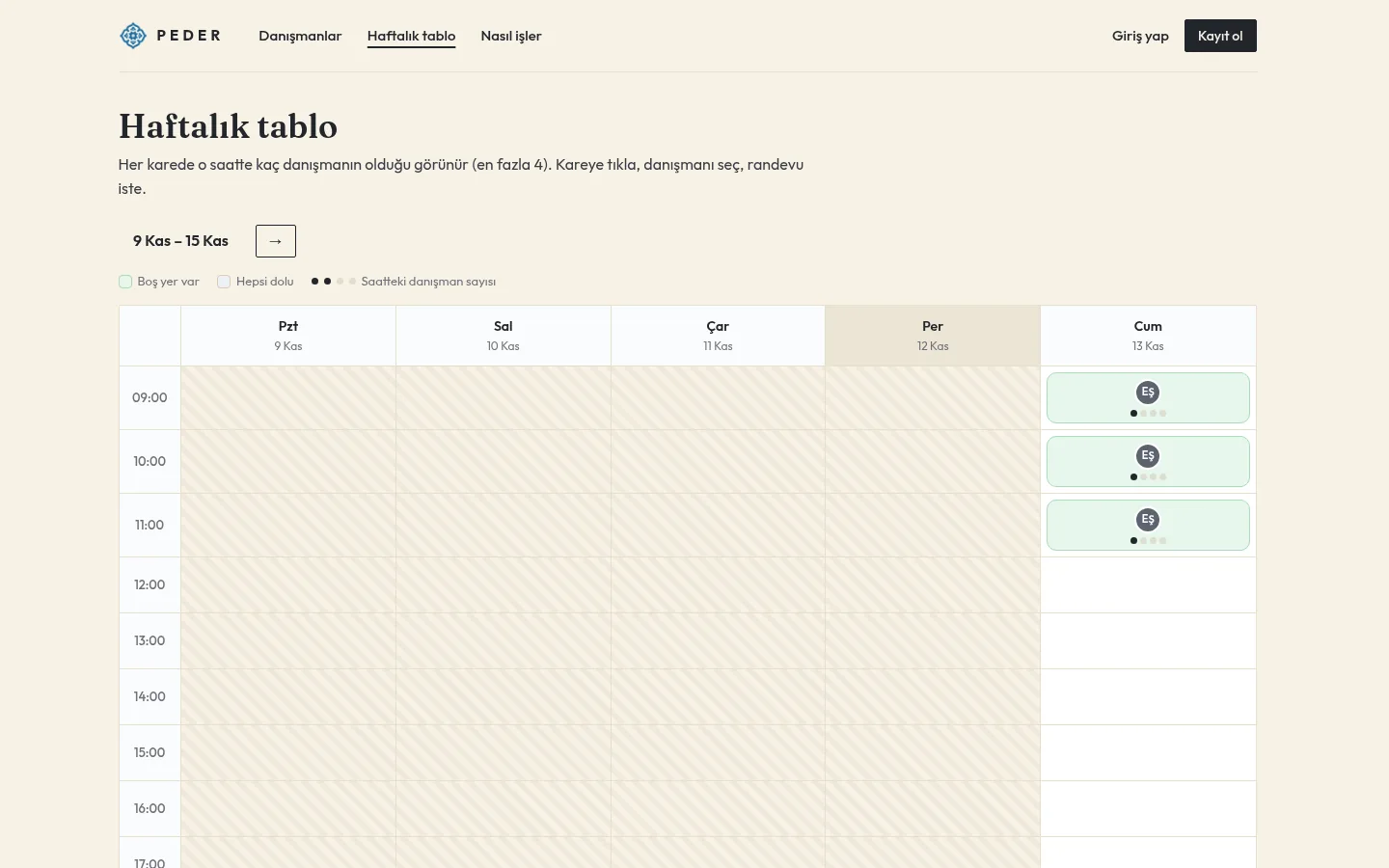
Peder weekly table: available counsellors per hour and free slots
BWeb · weekly table
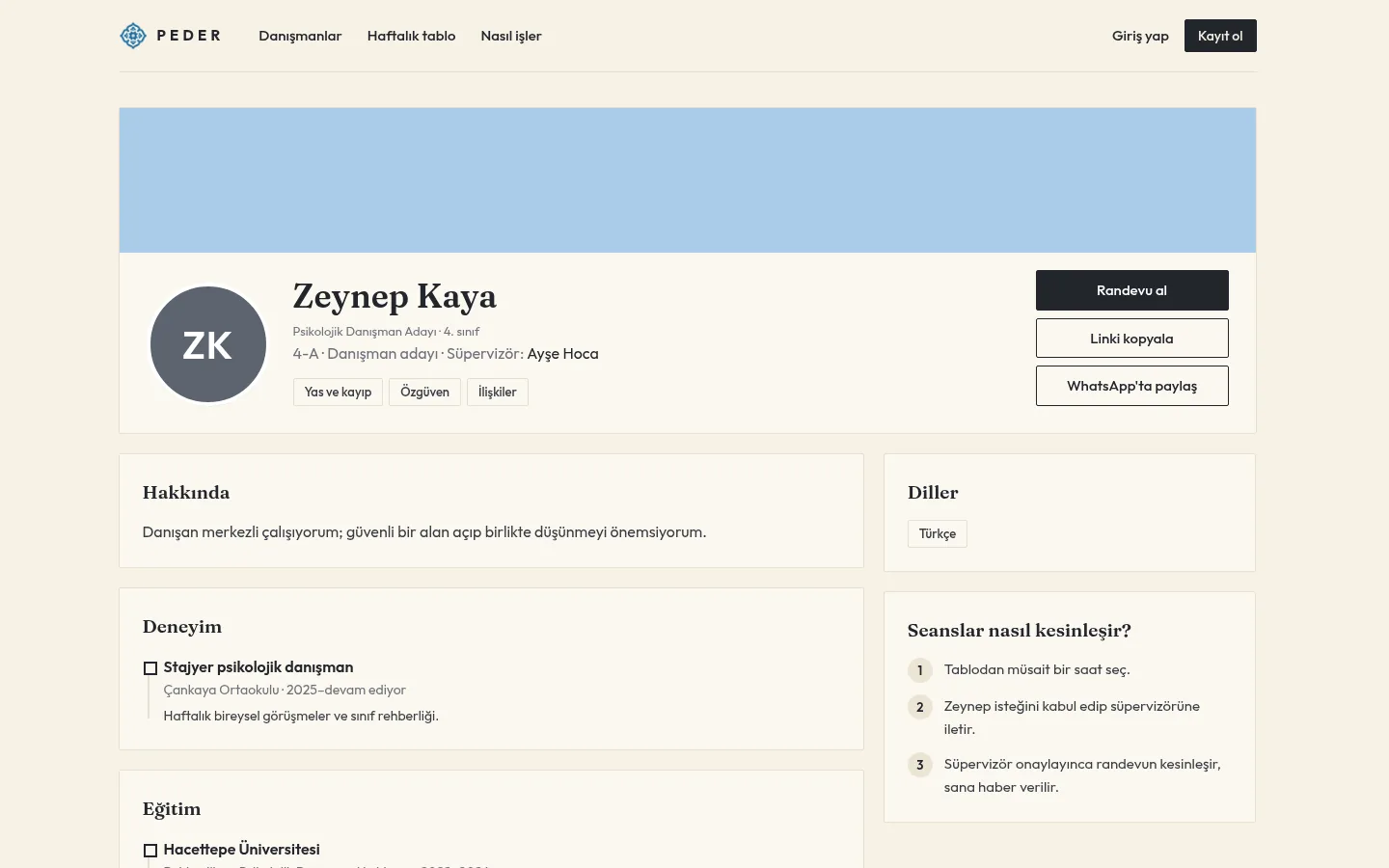
Peder trainee counsellor profile: supervisor, interests, experience and booking button
CWeb · counsellor profile
Peder supervisor panel: students, pending approvals, notifications and upcoming sessions
DWeb · supervisor panel

02Schema and notes

BROWSER3 roles CLOUDFLARE WORKER · HONO MIDDLEWAREpenalty · rate limit · filter ROUTESrole checks · record ownership ENCRYPTIONAES-GCM · PBKDF2 D1SQLite EMAILcodes · alerts PERSONAL DATA · UNDER KVKK
  1. Runs entirely in one Cloudflare Worker (Hono); data in D1.
  2. Every request passes, in order: logging, IP penalty, rate limit, body limit, input filter, country filter.
  3. Violations add points to the IP; above a threshold the IP is quarantined for a while.
  4. Session reports, supervisor notes and messages are stored encrypted with AES-GCM.
  5. TOTP for admins; an email code for other roles when signing in from a new device.

03Parts list5 parts

ItemPartDescription
01WorkerHono, role-based routes
02MiddlewarePenalty engine, rate limit, WAF filter, country filter
03IdentityPBKDF2 passwords, CSRF, TOTP and email codes
04DataCloudflare D1 · 10 migrations
05NotificationsWeb Push and email

04Notes3 notes

NoNoteTopic
N1IP penalty engineScoring violations and quarantining the IP for a while; memory cache + D1, shared IPs
N2Login endpointNot leaking whether an account exists: dummy hash, one error message, fail-closed MFA
N3File accessLetting only the parties download a shared file while the relationship lasts; safe response headers

—End of sheetdrawn by MUHAMMEDPYZ

Sheet 09 / 10

SİBERARCHİVE

Independent digital news platform publishing cybersecurity research, data breaches and open-source intelligence alongside current news.

Subject
Publishing · Security
Platform
Blogger
Team
Partner · Liviciana
Date
2024–
Address
siberarchivee.blogspot.com ↗
Status
Live

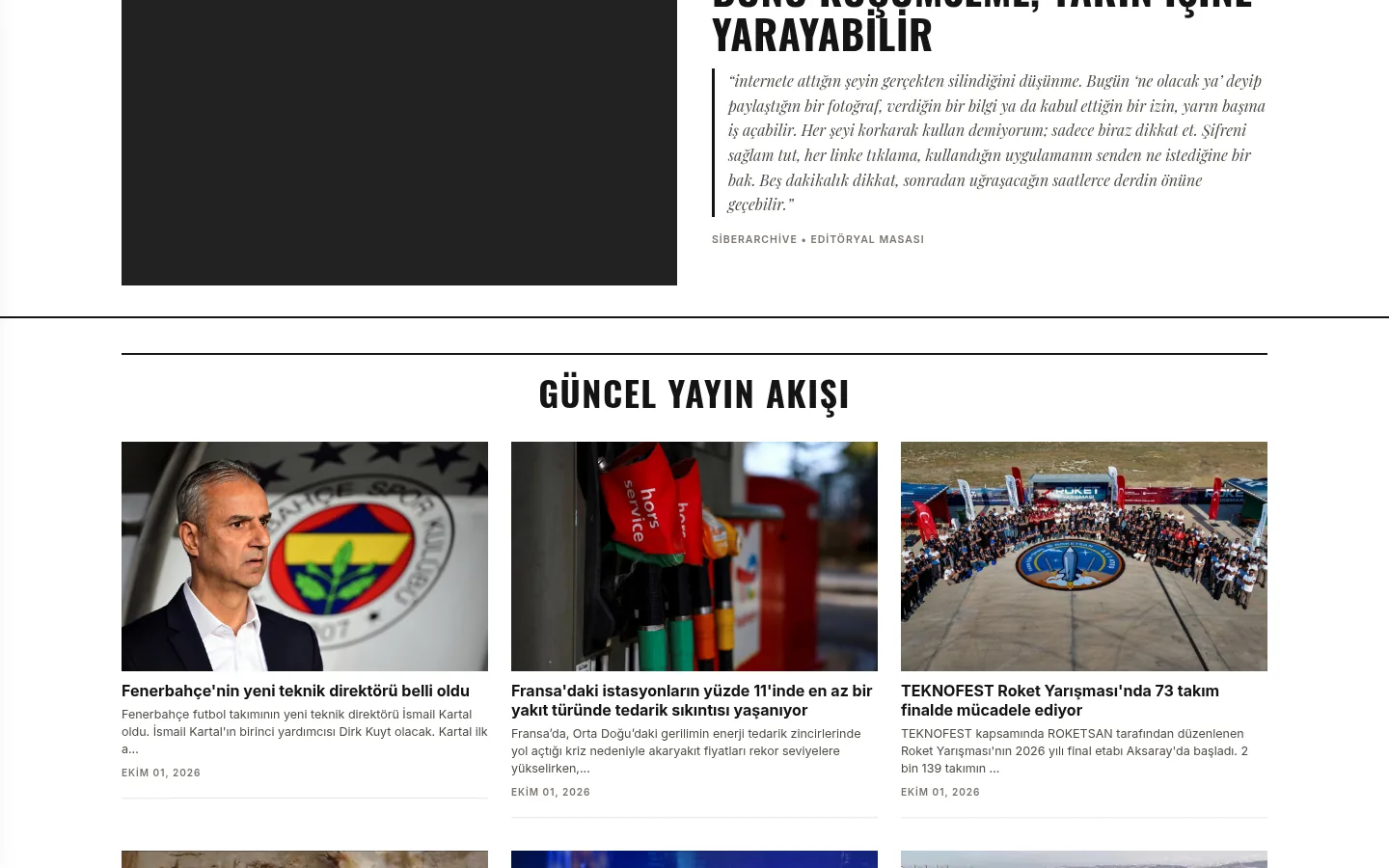
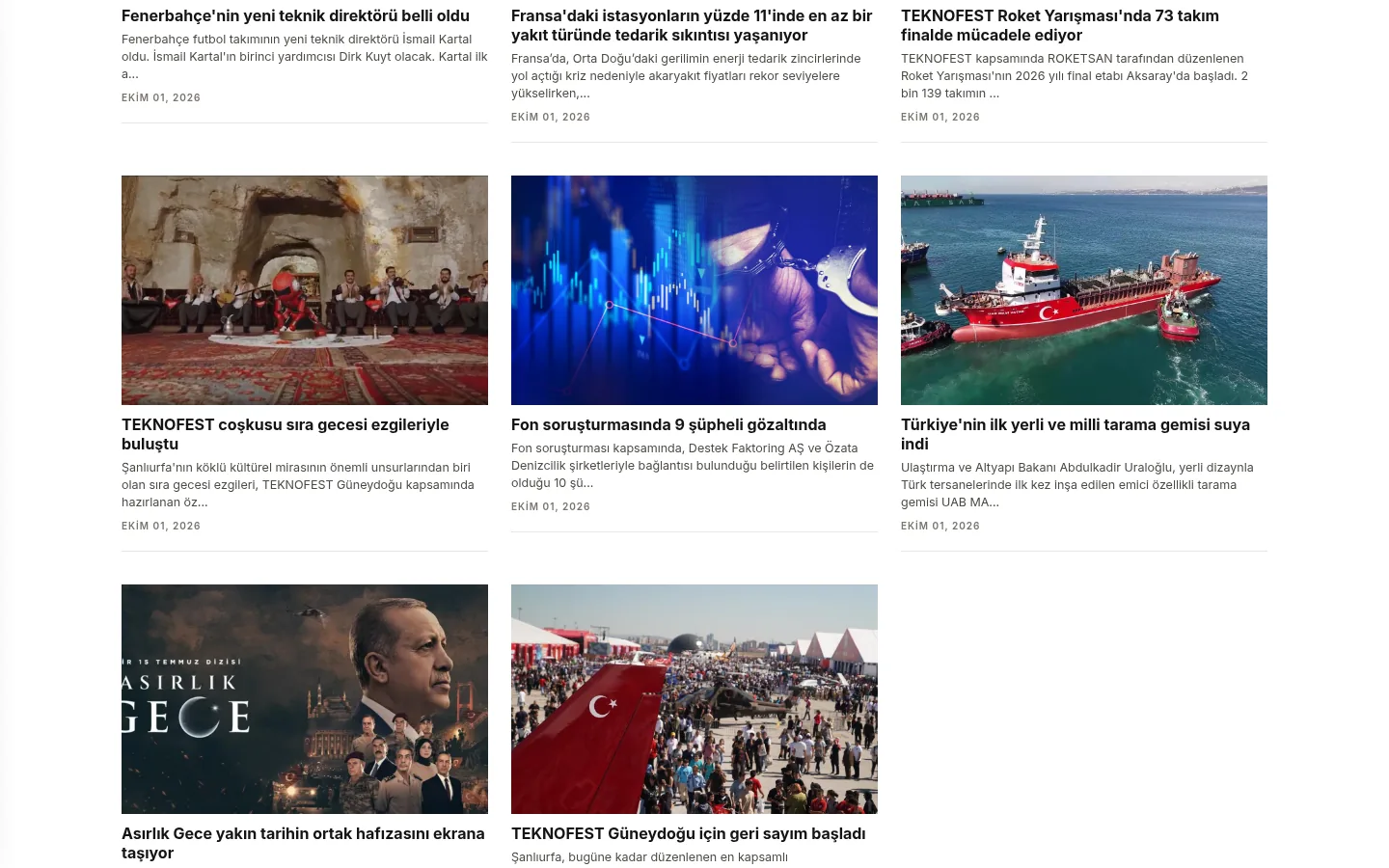
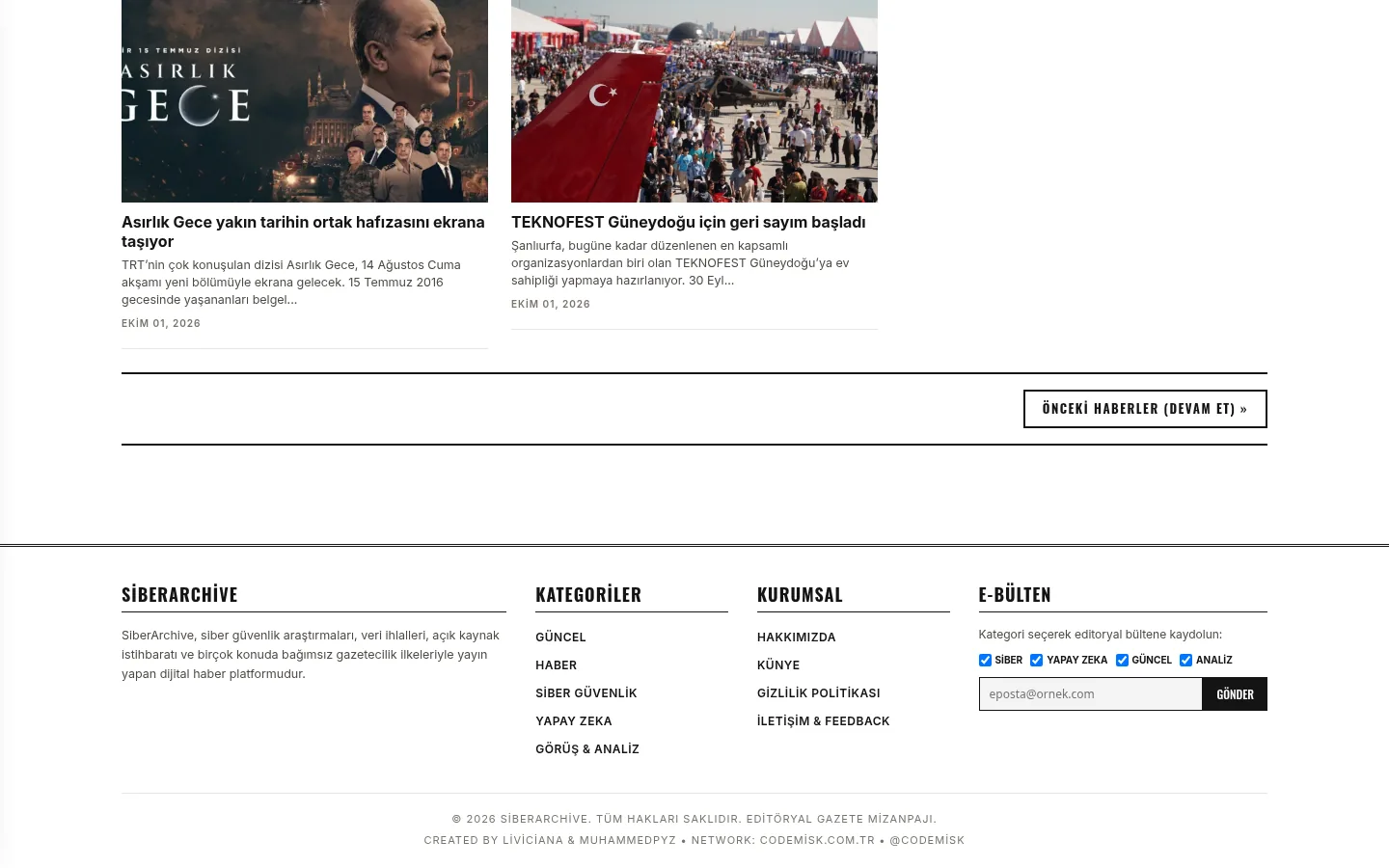
SiberArchive is an independent digital news site that publishes cybersecurity, AI and current news in an archive layout. It is run together with Liviciana: content and design by Liviciana, systems and cloud infrastructure by Muhammedpyz. The site runs on Blogger, and what Blogger cannot do comes from a separate backend: the per-category email newsletter, the contact form and the technology news feed connect to Codemisk's API on Cloudflare. Newsletter emails are sent through Resend. Readers' theme and category preferences are kept only in their own browser.

01Views3 views

SiberArchive home page opinion section and current news feed
AWeb · news feed
SiberArchive news card grid
BWeb · news grid
SiberArchive footer: description, categories, corporate links and per-category newsletter
CWeb · categories and newsletter

02Schema and notes

EDITORSLiviciana · muhammedpyz BLOGGERblogspot POSTnews · analysis · feature CATEGORIESsecurity · AI ARCHIVE2024 → today NEWSLETTERper category CODEMISK NETWORK · LIVE
  1. Its own description: independent current press and digital archive.
  2. Categories: cybersecurity, AI, news, agenda, world, economy, opinion & analysis, science, defence and more.
  3. The archive goes back to 2024.
  4. Email newsletter with per-category subscription.
  5. Run together with Liviciana; part of the Codemisk network.

03Parts list5 parts

ItemPartDescription
01PublishingBlogger · siberarchivee.blogspot.com
02CategoriesCybersecurity, AI, news, economy, opinion & analysis and more
03Archive2024 to today
04NewsletterPer-category subscription
05TeamLiviciana · muhammedpyz

—End of sheetdrawn by MUHAMMEDPYZ

Sheet 10 / 10

CODEMISK

Web design and software studio. Menu, showcase and biography sites, built through a five-step process: strategy, design, development, launch and analysis.

Subject
Web studio
Platform
Web
Team
Partner · Liviciana
Address
codemisk.com.tr ↗
Status
Live

Codemisk is a web design and software studio run together with Liviciana. It builds menu sites for restaurants and cafés, showcase sites and personal biography sites, following a five-step process: strategy, interface design, development, pre-launch testing and post-launch analysis. Front ends are written in React and Vue.js, and sample work is live on Vercel. The studio's own site runs on Cloudflare, along with the API that serves its blog posts and SiberArchive's newsletter and contact form.

01Views3 views

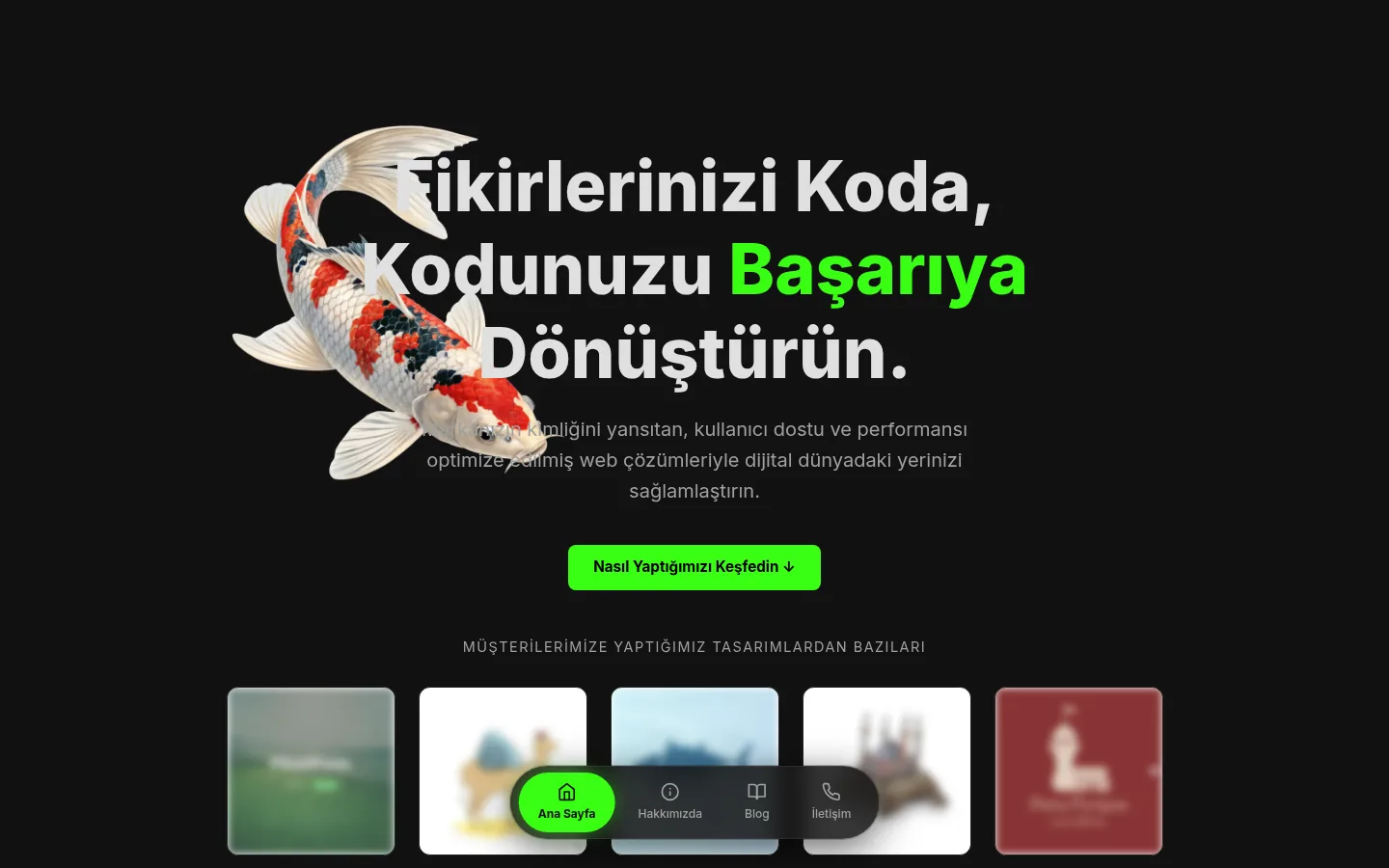
Codemisk home page headline and client designs
AWeb · home
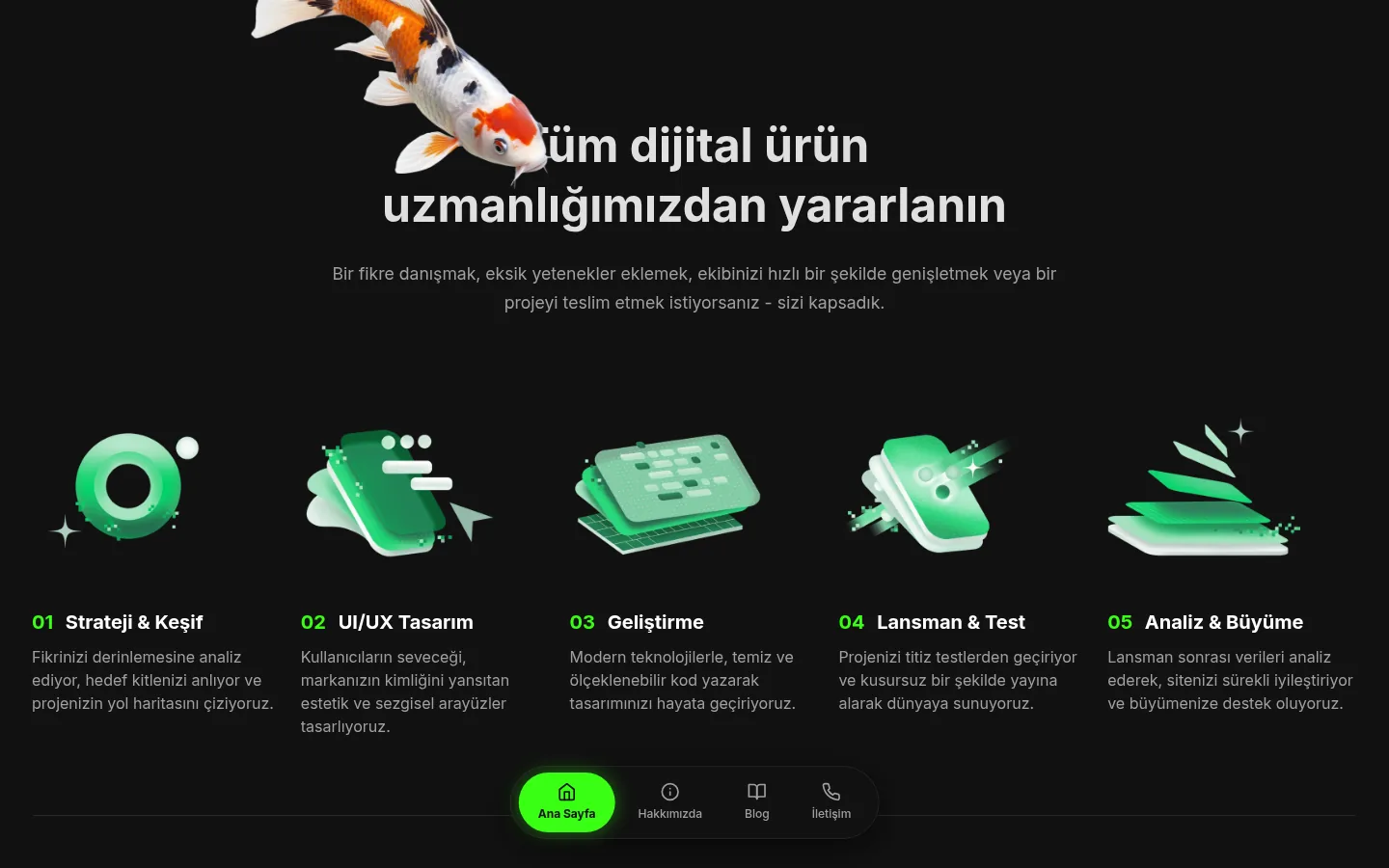
Codemisk process: strategy, UI/UX design, development, launch and testing, analysis and growth
BWeb · five-step process
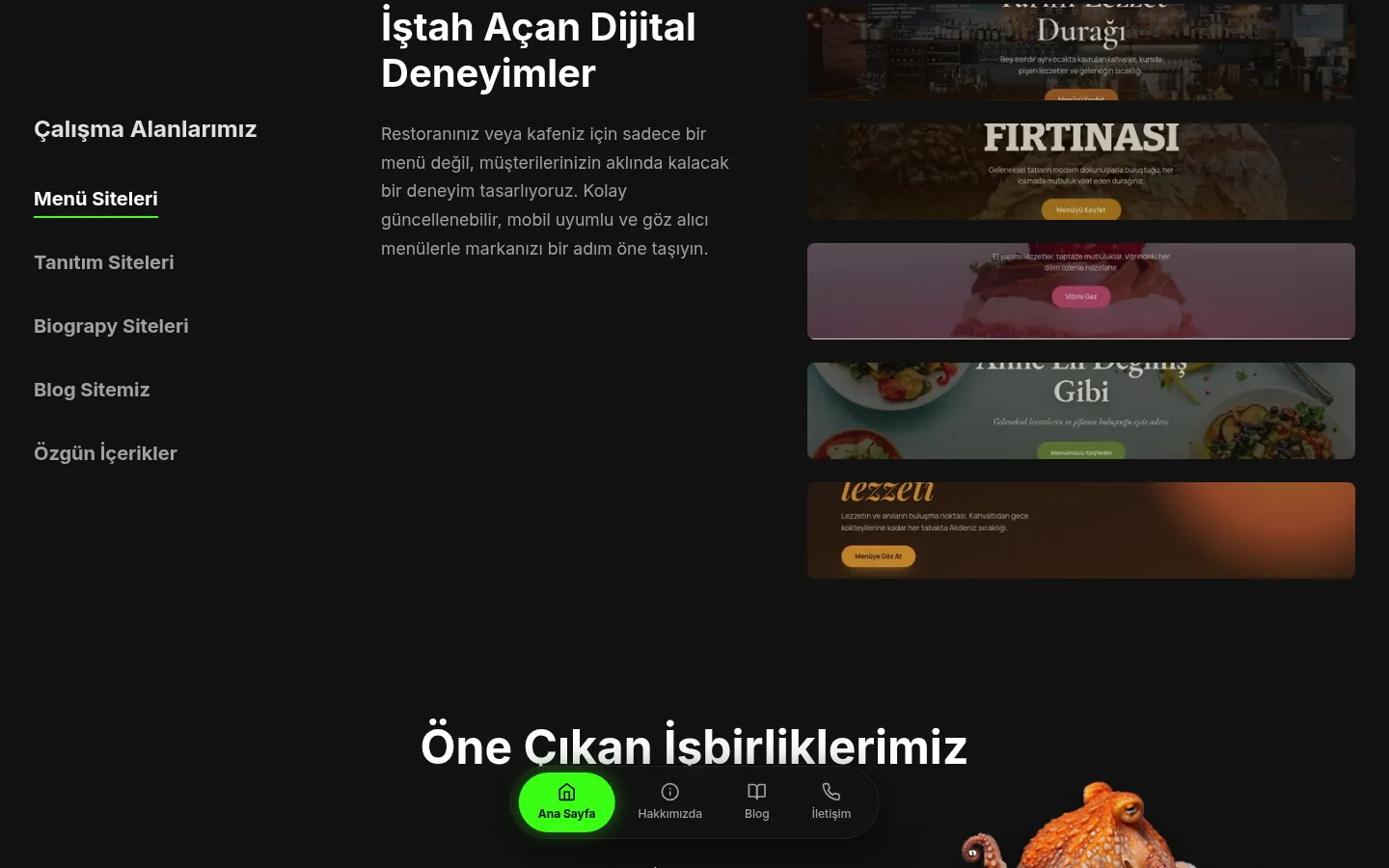
Codemisk work areas: menu, showcase, biography sites and sample menu sites
CWeb · work areas

02Schema and notes

01 STRATEGYdiscovery · roadmap 02 DESIGNUI/UX · brand identity 03 DEVELOPMENTReact · Vue.js 04 LAUNCHtest · release 05 ANALYSISgrowth · SEO · speed CONTINUOUS IMPROVEMENT MENU · SHOWCASE · BIOGRAPHY SITES · BLOG
  1. A partnership with Liviciana.
  2. Five-step process: strategy and discovery, UI/UX design, development, launch and testing, analysis and growth.
  3. Built with React and Vue.js; SEO, speed optimisation and mobile support are part of the work.
  4. Work areas: menu, showcase and biography sites, blog.
  5. Sample work is live on Vercel; SiberArchive is part of the Codemisk network.

03Parts list6 parts

ItemPartDescription
01Strategy & discoveryAudience and roadmap
02UI/UX designInterface and brand identity
03DevelopmentReact, Vue.js
04Launch & testingPre-release testing
05Analysis & growthSEO, speed optimisation
06Work areasMenu, showcase, biography sites, blog

—End of sheetdrawn by MUHAMMEDPYZ
Legend

Symbols and tools used in the sheets

Service / app

Every box in the sheets is a running service

Data

Database and cache

Network node

Router / relay

Identity

Session and authorization

Container

Service group or external service

Encrypted channel

End-to-end encrypted line

Connection

API / socket call

Marked note

Critical design decision

End of set

CONTACT

Mail
info@muhammedpyz.me
Discord
muhammedpyz
Domain
muhammedpyz.me