Sheet 02 / 10
MARKASIUM
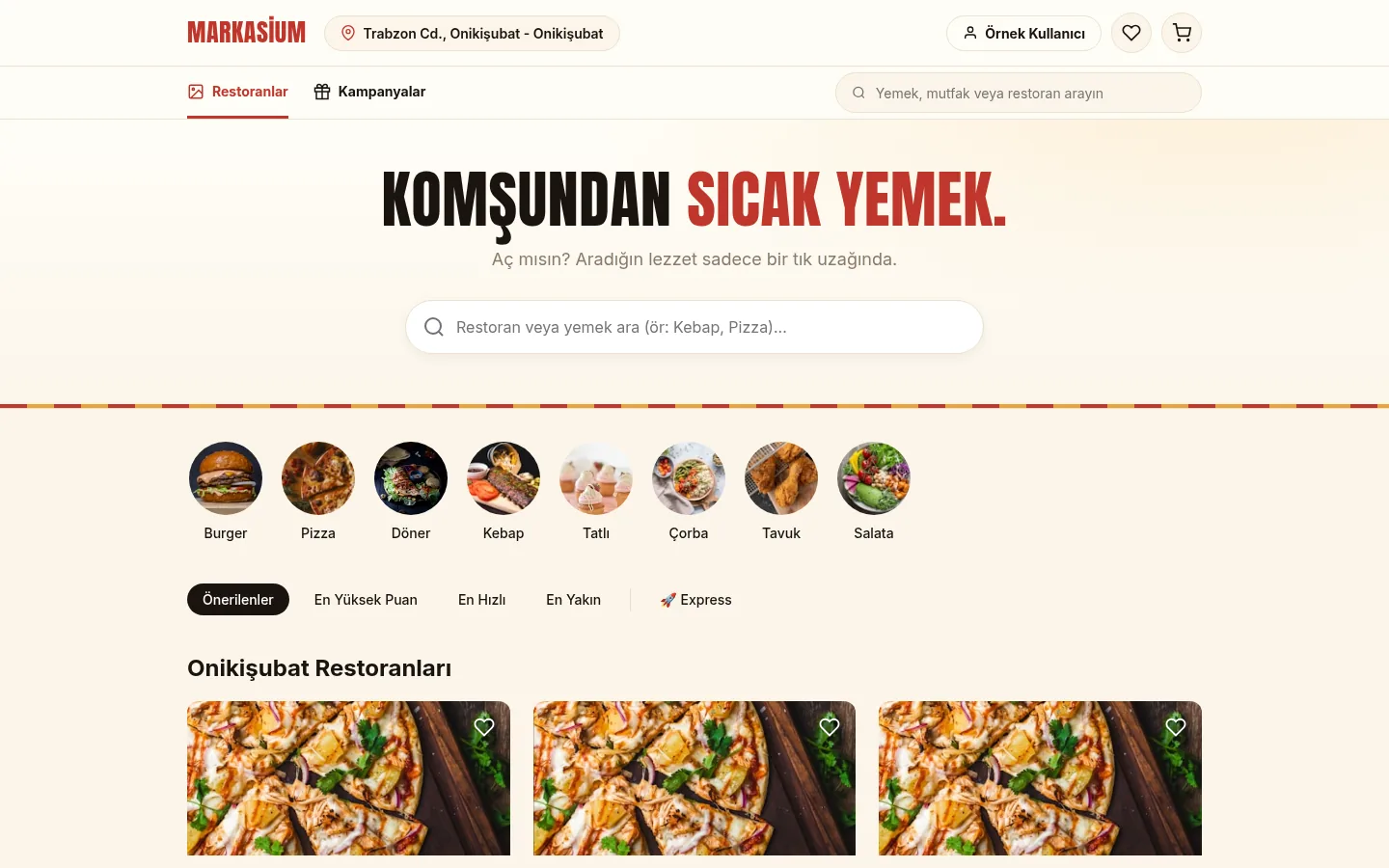
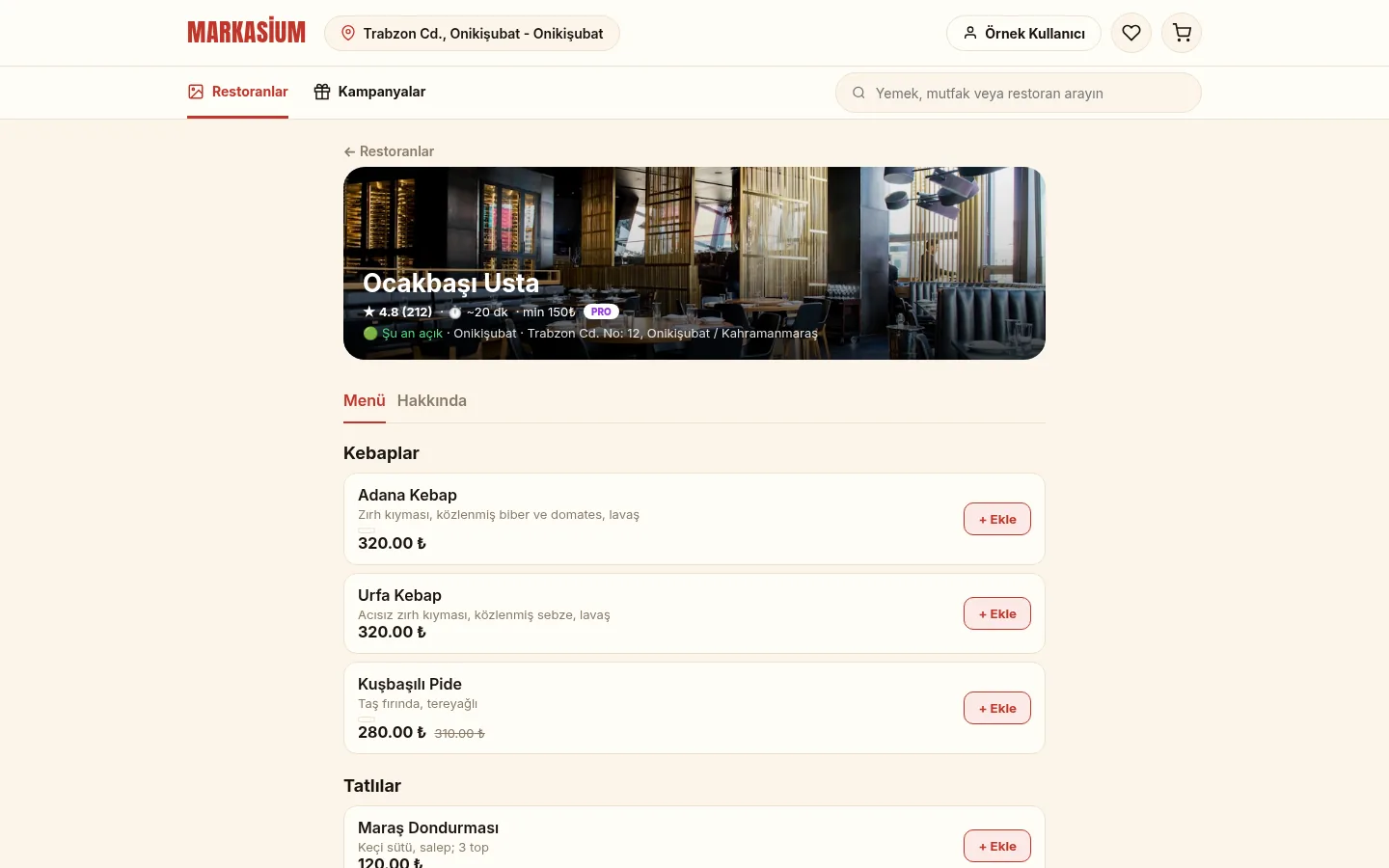
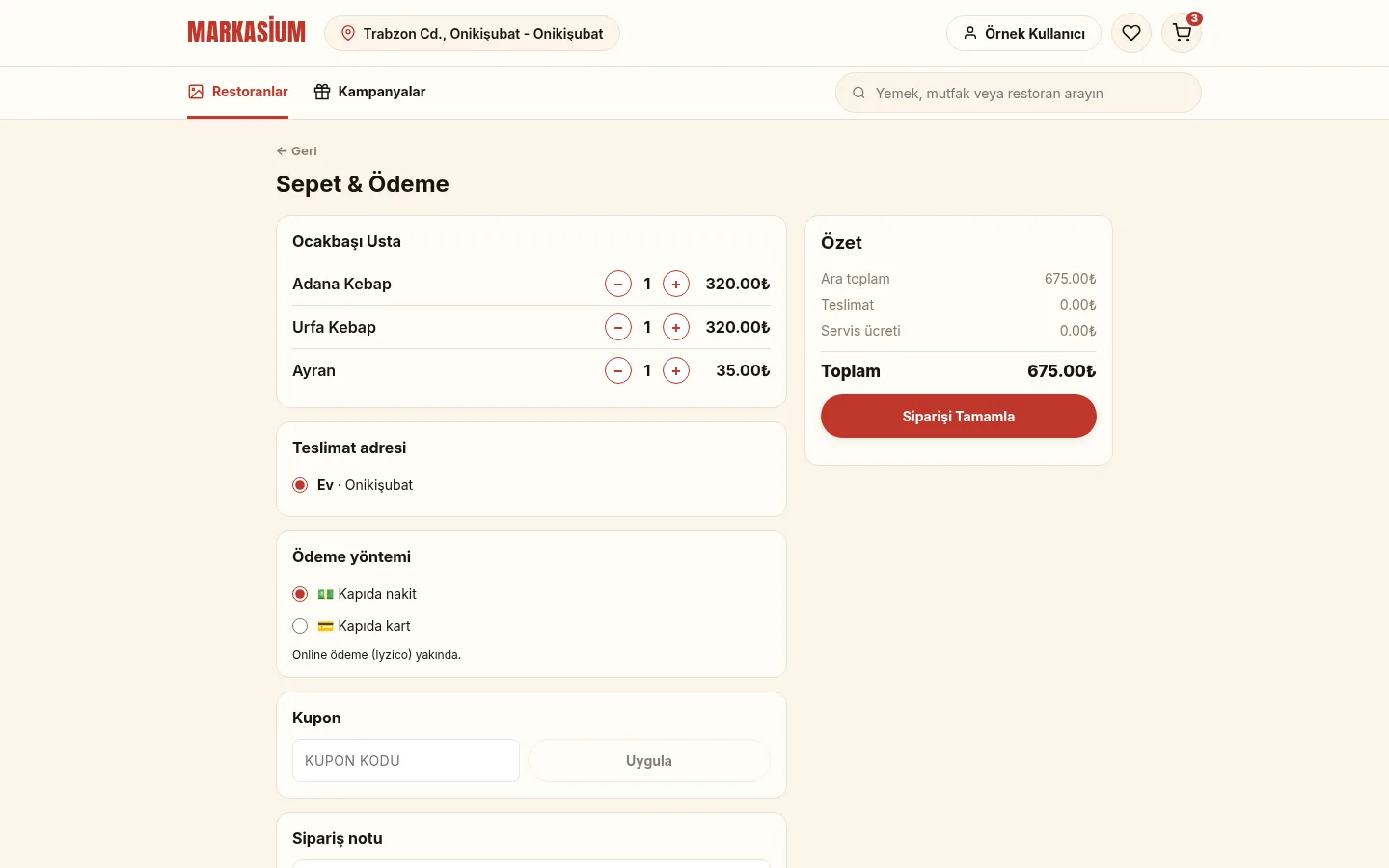
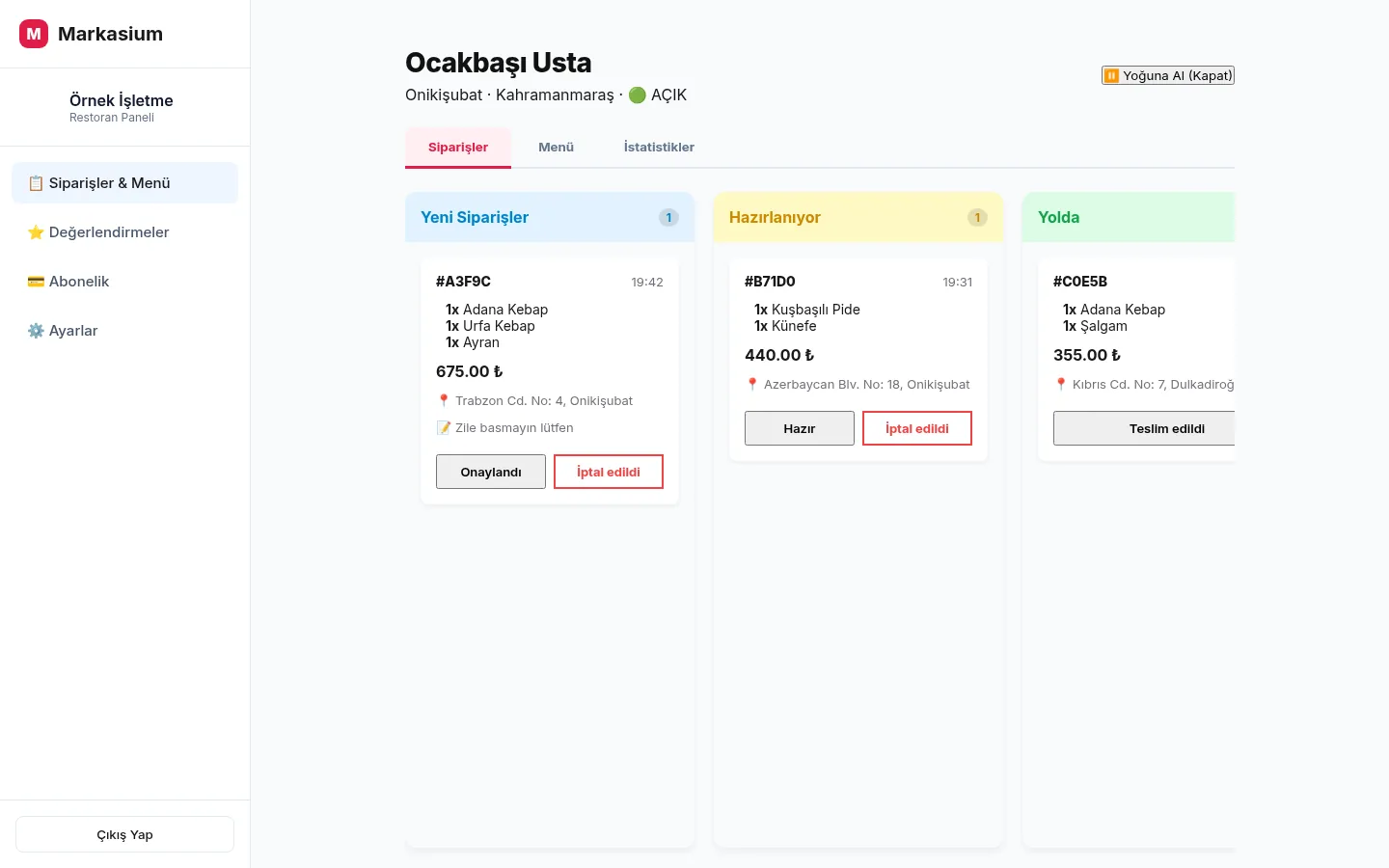
Multi-vendor food ordering platform that runs on subscriptions instead of commissions. It consists of a customer storefront, a restaurant panel and a single API that serves both.
- Subject
- Backend
- Platform
- Web
- Source
- Private repo
- Date
- 2026
- Status
- In development
Markasium is a multi-vendor food ordering platform where restaurants pay a monthly subscription instead of a per-order commission. The customer site, restaurant panel, courier app, admin and founder panels all talk to one Spring Boot API. Authentication uses 15-minute ES256 JWTs signed by the API itself; refresh tokens are single-use in Redis and each panel reads its own cookie. Payments are taken on Iyzico's hosted page, so card data never reaches Markasium; the return is verified by asking Iyzico. Orders, menus and subscriptions live in MariaDB, and the services run on Docker. The notes cover verifying the Iyzico return, moving from Keycloak to self-issued JWTs, and the single-session design.
01ViewsBuilt from current source · sample data
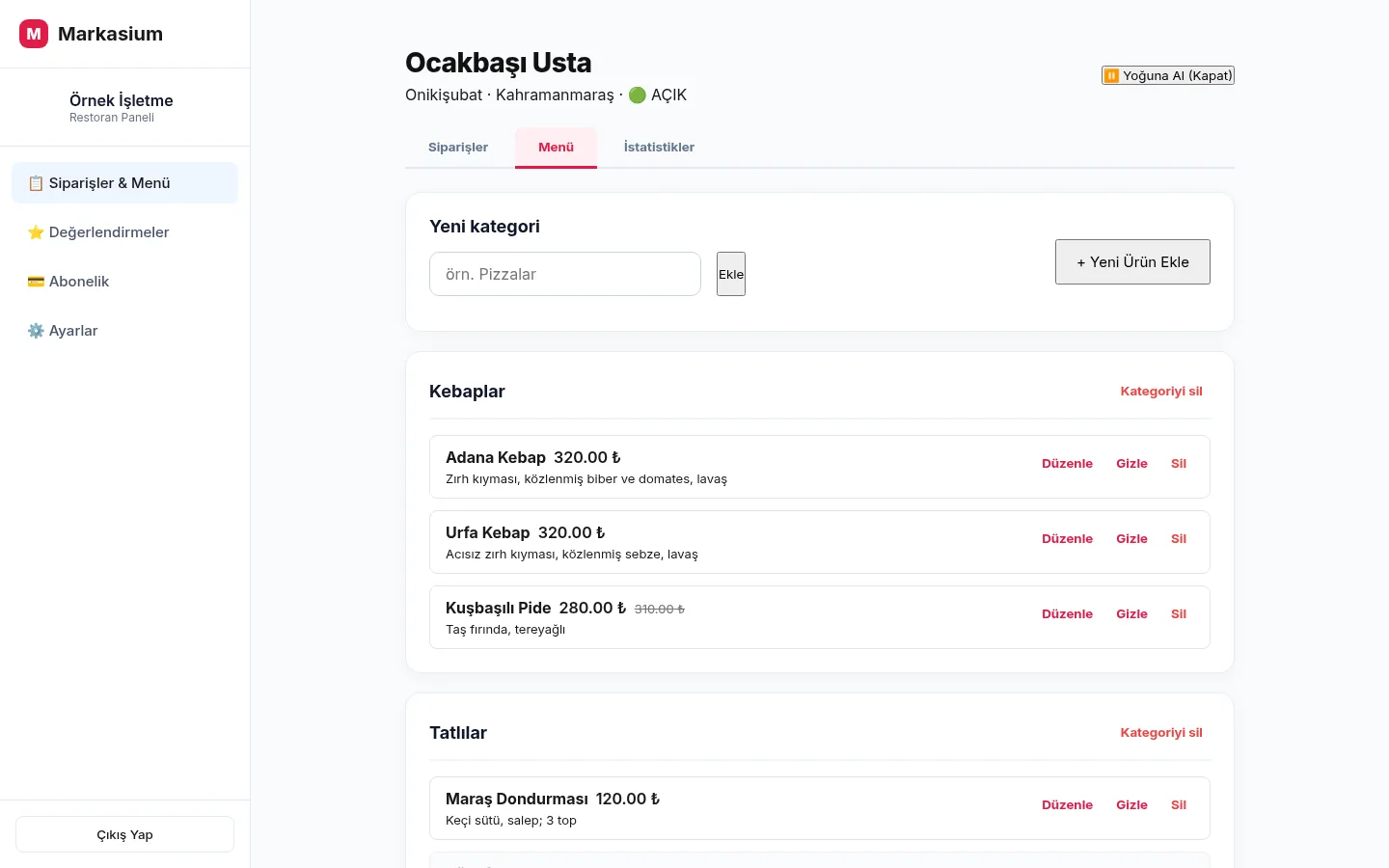
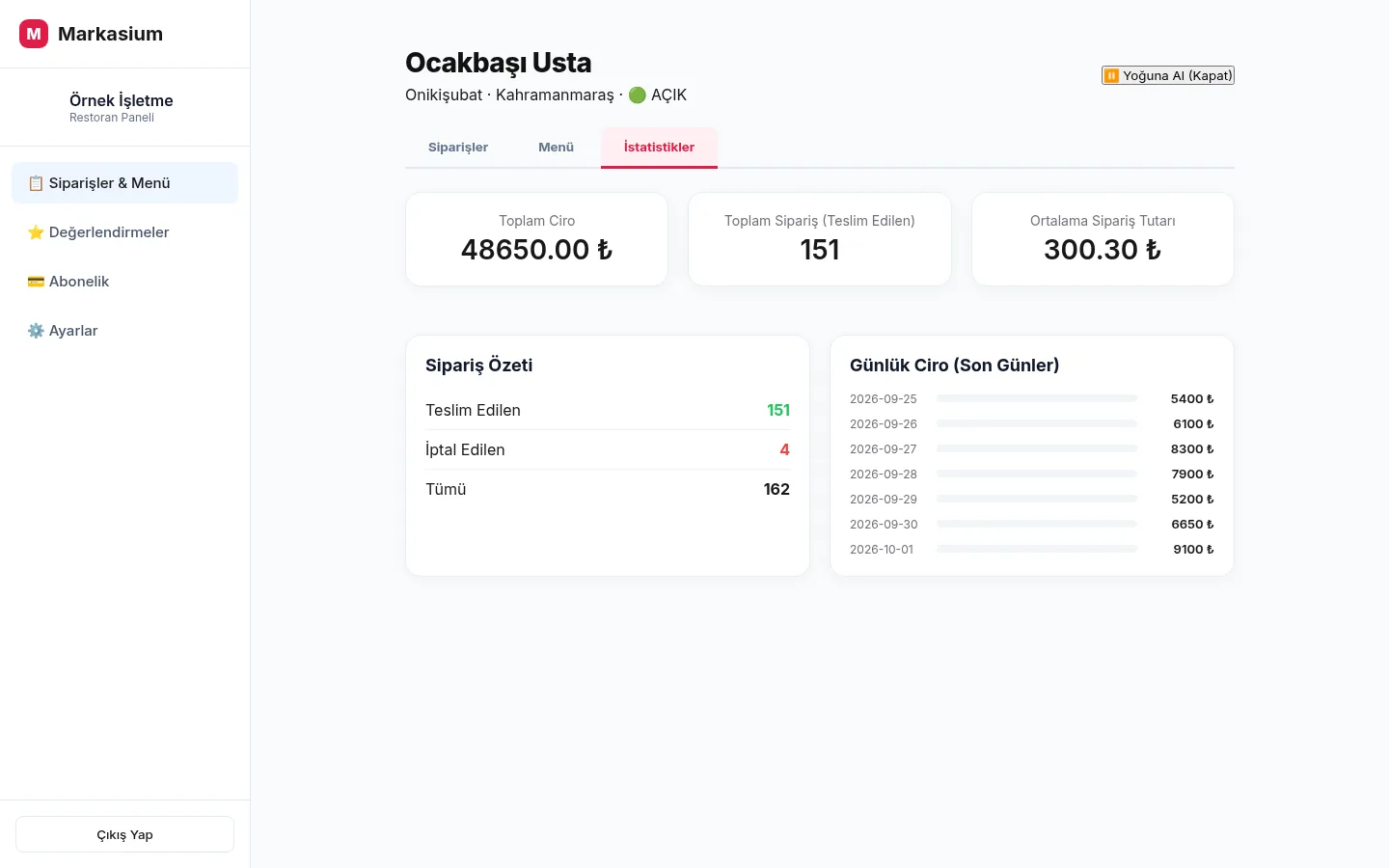
02Schema and notes
- Three services on one Docker network: customer web, restaurant panel, API.
- Business logic and the order engine live in the Spring Boot API.
- Authentication lives in the API: ES256-signed JWTs, refresh tokens in Redis. Keycloak was removed in 2026-10.
- Order, menu and subscription data in MariaDB.
- Revenue model: subscription, not commission.
03Parts list7 parts
| Item | Part | Description |
|---|---|---|
| 01 | Customer web | Restaurant listing, ordering · :3000 |
| 02 | Restaurant panel | Order, menu and subscription management · :3001 |
| 03 | API | Business logic and order engine · :8080 |
| 04 | Identity | ES256 JWT, role claims, HttpOnly cookies |
| 05 | Sessions | Redis: refresh tokens and single-session records |
| 06 | Database | MariaDB |
| 07 | Deployment | Docker Compose, single network |
04Notes3 notes
| No | Note | Topic |
|---|---|---|
| N1 | Verifying the Iyzico callback | Verifying the payment without trusting the callback; refunds for double payments, catching lost callbacks |
| N2 | From Keycloak to own JWT | Removing Keycloak and signing ES256 JWTs; why, decisions, the validation chain |
| N3 | Single session and refresh | Atomic refresh rotation, one active session, a separate cookie per panel |
—End of sheetdrawn by MUHAMMEDPYZ